
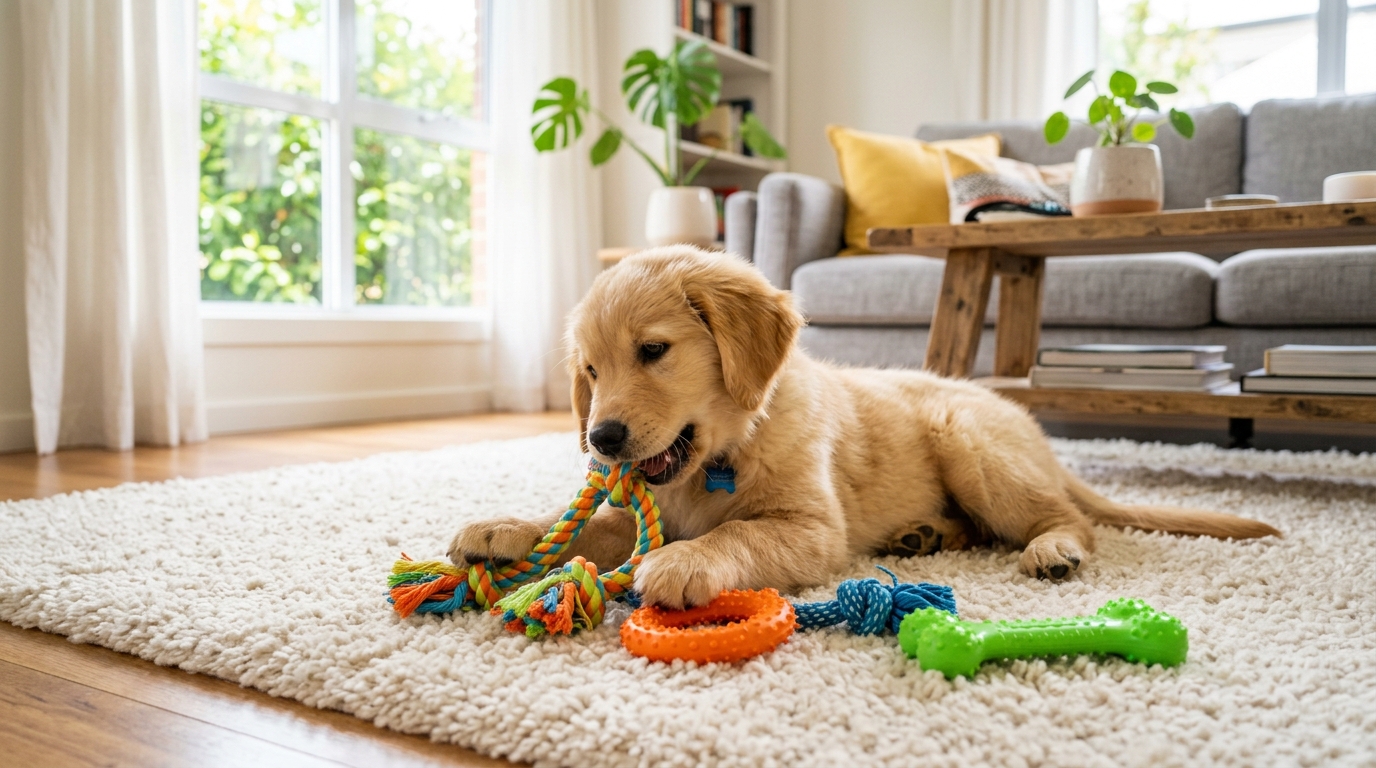
One day you brought home a sweet, sleepy ball of fluff. Within forty-eight hours, they miraculously evolved into a miniature land shark equipped with twenty-eight razor-sharp needle teeth and an insatiable biological mandate to sink their jaws into baseboards, chair legs, leather loafers, and your bare Achilles tendons. Welcome to the puppy teething phase.
New puppy parents often view persistent chewing as naughtiness, spite, or stubborn boundary testing. Canine developmental biology tells an entirely different story: between twelve weeks and six months of age, your pup’s baby teeth are forcibly pushed out by forty-two larger adult teeth. Their gums are swollen, itchy, and genuinely throbbing. Chewing is not a behavioral flaw; it is physical pain management and sensory exploration. Here is the developmental timeline of puppy teeth, why punishment fails, and how calibrated multi-texture chew toys safely channel puppy jaw energy while saving your home decor.
The physiological timeline of the canine land shark
Understanding what is happening inside your puppy’s mouth turns exasperation into empathy. The canine dental transition occurs in rapid stages:
- Weeks 2 to 4: First deciduous incisors and canines emerge through pristine puppy gums.
- Weeks 5 to 8: All twenty-eight temporary teeth are in place. The puppy learns bite inhibition through social feedback with mother and littermates.
- Weeks 12 to 16: The real storm begins. Incisors loosen and fall out; adult premolars and huge canines begin their upward migration through dense jaw bone. Gums become hyperemic, swollen, and itchy.
- Weeks 16 to 24 (Peak Teething): Molars push through the rear jaw. Puppies experience intense gnawing urges to dislodge stubborn baby tooth roots and relieve deep bone pressure. By six to seven months, all forty-two adult teeth should be firmly anchored.
Why scolding makes chewing worse
When you catch your pup vigorously gnawing the edge of your dining room table, yelling “NO!” or slapping the floor only increases cortisol and arousal. Puppies lack impulse control. Punishing an involuntary biological reflex simply teaches the pup to chew furniture secretly behind the sofa when you step out of the room.
The golden rule of puppy management is never take an object away without offering a superior replacement. Keep calibrated chew toys within arm’s reach in every room. The instant teeth touch leather or wood, calmly swap the furniture for an enticing textured toy and praise enthusiastically the moment their jaw clamps onto the appropriate target.
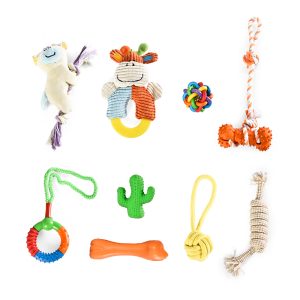
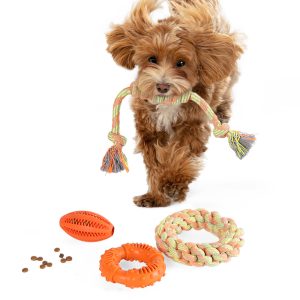


Tailrific offers two purpose-engineered chew and play assortments built specifically for developing jaws:
- Tailrific 9-Piece Puppy Teething & Interactive Toy Assortment (SKU: PLEP-DT006): A comprehensive developmental kit featuring food-grade textured rubber rings, massage-groove bones that soothe tender gums, and tightly braided natural cotton flossing ropes that gently clean plaque while satisfying natural predatory tugging instincts.
- Tailrific 4-Piece Heavy-Duty Interactive Dog Rope & Rubber Chew Set (SKU: PLEP-DT005): Built for power-chewers and fast-growing adolescent breeds. Utilizes ultra-durable non-toxic natural rubber combined with reinforced multi-knot climbing ropes that withstand aggressive gnawing without shedding loose synthetic threads.
The cooling relief protocol: Nature’s gum soother
Human pediatricians recommend chilled teething rings for infants; the exact same vascular science applies to canine puppies. Cold temperatures constrict local blood vessels in the gingiva, reducing inflammatory swelling and numbing sensitive nerve endings.
Take the textured rubber chew toys from the Tailrific Teething Set, soak them in water or low-sodium bone broth, and place them in the freezer for two hours. Offering a chilled chew toy during the evening “witching hour”—when puppies are often cranky and restless from daily fatigue—provides twenty minutes of soothing relief, sending a relaxed puppy straight into a peaceful nap.
A peaceful transition to adult canine companion
The land shark phase does not last forever. By providing the right tactile variety, gentle cooling relief, and consistent positive redirection, you protect your furniture, preserve your sanity, and guide your puppy into an adult dog with impeccable, reliable chew-toy manners.