

At 2:14 AM, the haunting solo begins. It starts with a tentative whimper, escalates into rhythmic, high-pitched crying, and culminates in frantic scratching against the crate door that obliterates your household’s REM sleep. You lie awake in the dark, caught in an agonizing tug-of-war between expert training advice that says “ignore it so you don’t reward whining” and maternal instinct that screams your baby dog is in profound distress.
For a newly adopted puppy or anxious rescue dog, nocturnal crying is not manipulation—it is an ancient survival panic. In the wild, a solitary canine pup separated from their mother and warm littermates in the dark has every reason to fear predators and hypothermia. Loneliness registers in the canine brain as an existential emergency. Here is the neurobiology of canine nighttime anxiety, why standard soothing tricks fail, and how biomimetic pulsing heartbeat companions provide the deep physiological reassurance puppies need to sleep peacefully through the night.
Why night isolation triggers canine survival panic
To understand your puppy’s midnight distress, look at their life before arriving at your home. For their entire existence, they have never slept alone. They fell asleep enveloped in the warmth of their siblings, breathing in synchronized rhythm and feeling the steady, calming thrum of their mother’s heartbeat.
When placed alone in a dark room or crate, the sudden absence of warmth and physical contact triggers the amygdala. In nature, a puppy alone in the dark is in mortal danger. Their high-pitched crying is a distress flare designed to guide their mother back. Leaving a pup to “cry it out” for hours floods their developing nervous system with toxic cortisol, fostering chronic separation anxiety rather than independence.
The science of biomimetic calming
Animal behaviorists and veterinary neurologists have proven that canine anxiety is deeply responsive to tactile rhythm. A steady, gentle pulse calibrated to a resting maternal heart rate (approximately 60 beats per minute) activates the parasympathetic nervous system, inducing muscle relaxation and tranquil slumber.
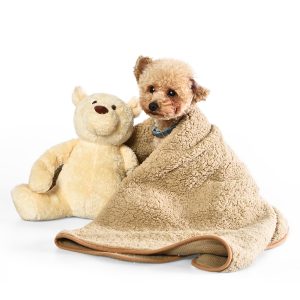

The Tailrific Huggy Bear Heartbeat Calming Plush & Blanket Set (SKU: PLEP-DT002) is engineered specifically to recreate the sensory environment of the maternal nest:
- Vibrational Real-Feel Heartbeat Device: Tucked safely inside a secure Velcro belly pouch, the battery-operated heartbeat motor produces a gentle, realistic pulse that can be physically felt when the puppy cuddles against the plush bear.
- Ultra-Soft Snuggle Blanket: Includes a matching plush fleece blanket designed to be rubbed against the puppy’s mother and littermates before adoption, capturing familiar maternal pheromones and scents.
- Machine Washable Durability: Remove the heartbeat core in two seconds and toss the plush bear into the washing machine for effortless hygiene after night-time puppy accidents.
- Dual Modes: Features continuous pulsing for long night sleep or an automatic timer setting for daytime naps and crate acclimation sessions.
The 5-step peaceful bedtime protocol
Combine biomimetic sensory tools with consistent evening routines to establish lifelong healthy sleep habits:
- Step 1: The Evening Energy Drain. Engage in twenty minutes of gentle play and sniff-walks one hour before bed. A tired mind and body fall asleep three times faster.
- Step 2: Water Cutoff. Remove water bowls 90 minutes before bedtime to minimize midnight bladder emergencies. Always give one final potty break right before bedtime.
- Step 3: Prime the Huggy Bear. Activate the heartbeat device and place the plush companion inside their sleeping area with the fleece blanket so it is already warm and pulsing when your pup enters.
- Step 4: Keep Proximity Close. During the first week in a new home, place the crate or pen right beside your bed. Hearing your soft breathing provides a second layer of reassurance without requiring you to pick them up.
- Step 5: Calm, Low-Key Reassurance. If your pup whines, check if they need a bathroom break. Take them out calmly on leash with zero talking or play. If they eliminate, return them straight to their pulsing Huggy Bear. They quickly learn nighttime is exclusively for sleeping.
Restful nights for you and your puppy
Raising a puppy should be a joyful, bonding experience—not an ordeal of sleep deprivation. By addressing the physiological roots of nocturnal anxiety with warm, rhythmic companionship, you comfort your puppy’s fearful heart and restore peaceful, silent nights to your entire home.