
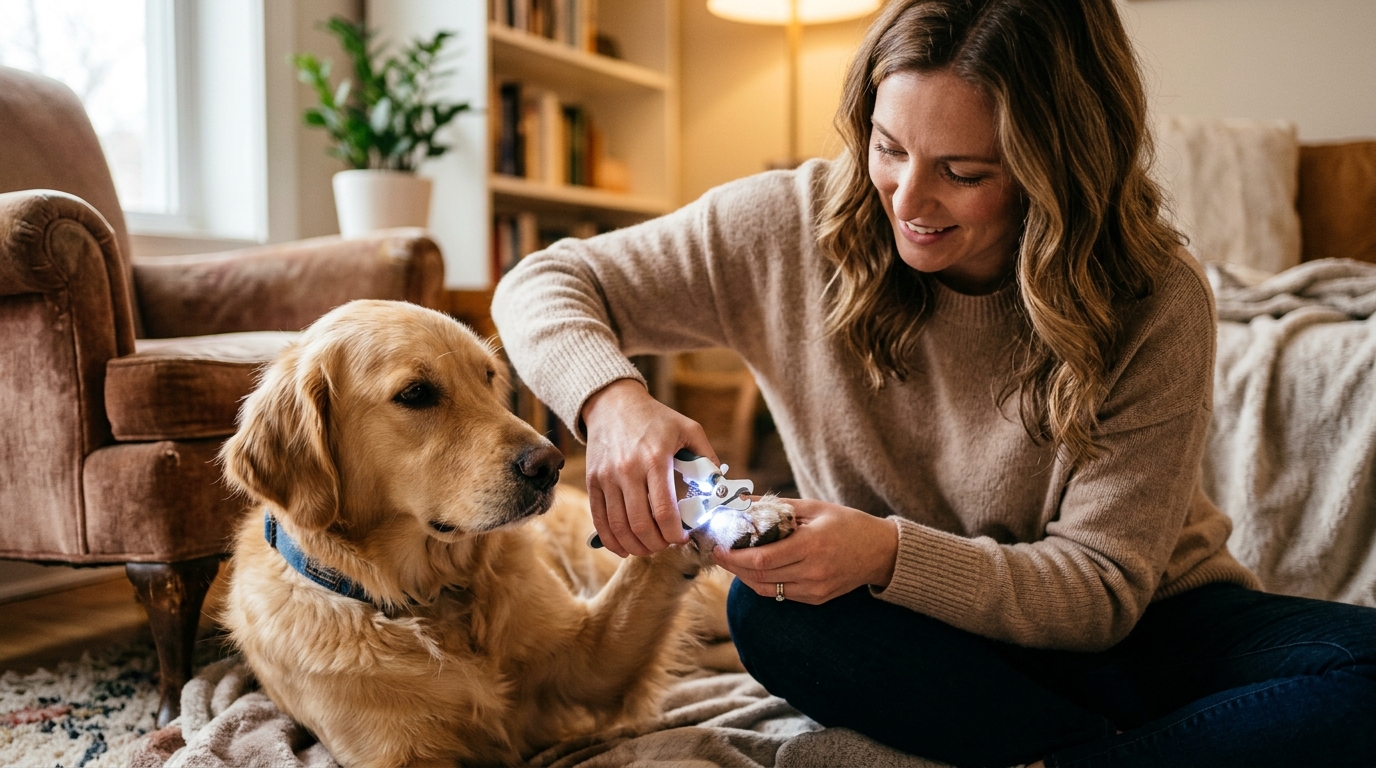
The moment the clipper handles click together, an eerie silence descends upon your household. Your dog, who was begging at your knees fifteen seconds ago, has vanished under the master bed. Your cat has discovered an urgent appointment behind the laundry dryer. If attempting to trim your pet’s nails feels like a high-stakes tactical hostage negotiation involving towels, treats, and widespread panic, you are certainly not alone.
For millions of pet parents, nail day is the single most dreaded grooming chore. The anxiety is completely understandable: cutting a pet’s nail too close snips the internal bloodline known as the quick, causing intense sharp pain, profuse bleeding, and lasting trauma that makes future trimming even harder. Yet overgrown nails are not just a cosmetic nuisance; they force paws into unnatural angles, strain skeletal tendons, and cause painful postural compensations. Here is the veterinary science of pet claw anatomy, why standard clippers cause fear, and how illumination and low-vibration grinding turn nail maintenance into a relaxed, two-minute routine.
The hidden orthopedic damage of overgrown claws
Claws that click on hard flooring are not just noisy—they represent a chronic musculoskeletal hazard. In nature, wild canines and felines wore their claws down naturally across miles of rough rock, gravel, and earth. Domestic pets walking on plush carpeting and smooth tile lack this natural abrasion.
When an overgrown claw contacts the floor with every step, the hard ground pushes the nail upward into the nail bed. This upward torque forces the delicate digital bones of the paw backward, shifting weight off the paw pads and onto the carpals and wrist tendons. Over time, dogs alter their entire spinal posture to avoid paw soreness, leading to chronic compensatory stiffness in the hips, shoulders, and lumbar back.
Anatomy of the quick: Why pets fear clipping
Unlike human fingernails which are dead keratin throughout, a dog or cat claw is a living anatomical structure. Inside the hard outer keratin horn lies the quick (the pulp cavity), rich in capillary blood vessels and sensitive nerve endings.
If dull or poorly positioned clippers slice into this vascular core, the pet experiences a searing shock of pain followed by stubborn capillary bleeding. Because canine and feline brains form intense negative associations with acute pain, a single nick can trigger years of frantic paw-pulling, growling, and fear. Even worse, many cheap scissor clippers exert dull crushing force before actually cutting, creating uncomfortable pressure in the nail bed even if the quick is untouched.
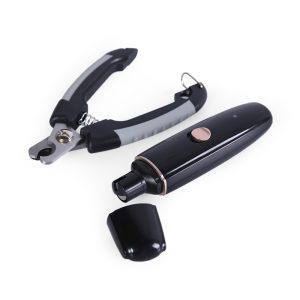



Tailrific provides two high-precision grooming tools designed to eliminate the anxiety of nail day:
- Tailrific Precision LED Pet Nail Clippers with Integrated File (SKU: PLEP-DG003): Equipped with an ultra-bright forward LED light beam that shines through the claw, illuminating the delicate pink quick so you always know exactly where to make a clean, confident cut. Features hardened stainless steel curved blades that slice cleanly in one crisp motion, a transparent nail splash guard that catches flying clippings, and a magnetic built-in nail file in the handle for instant smoothing.
- Tailrific 2-in-1 Electric Pet Nail Grinder & Safety Trimmer Kit (SKU: PLEP-DG001): For noise-sensitive pets and finish-work. Features an ultra-quiet whisper motor operating under 40dB with minimal vibration that will not startle timid dogs or cats. Its advanced diamond bit wheel gently buffs away sharp tips and rough burrs, preventing snagged rugs and scratched skin.
The 4-step low-stress clipping protocol
Transforming nail trimming from a panic event into a cooperative habit takes patience and systematic desensitization:
- Step 1: Paws Are Not Forbidden Territory. During daily cuddle sessions, casually massage your pet’s paws, gently extending their toes and offering high-value treats without any grooming tools in sight. Build positive paw-touch memories first.
- Step 2: Introduce the Tool Without Cutting. Let your dog sniff the clippers. Turn on the LED light and touch the smooth plastic handle to their leg while offering a treat. Run the electric grinder near them to normalize the gentle hum.
- Step 3: The 45-Degree Shave. Hold the paw firmly but gently. Inspect the nail under the LED light to identify the quick boundary. Angle the blade at 45 degrees, matching the natural downward curve of the nail. Slice only 1 to 2 millimeters at a time. It is far safer to take two small slivers than one deep cut.
- Step 4: End on a High Note. You do not need to finish all twenty claws in one sitting! Trim two claws, shower your pup with praise, give their favorite snack, and pause. Doing one paw per day keeps sessions joyful, calm, and cooperative.
Confidence creates calm
Pets are masters of reading human emotional states. When you approach nail day with sweating palms and nervous hesitation, your dog assumes danger is imminent. With bright LED illumination, razor-sharp surgical blades, and calm patience, you replace guesswork with clarity—giving both you and your four-legged companion peaceful, pain-free grooming confidence.