
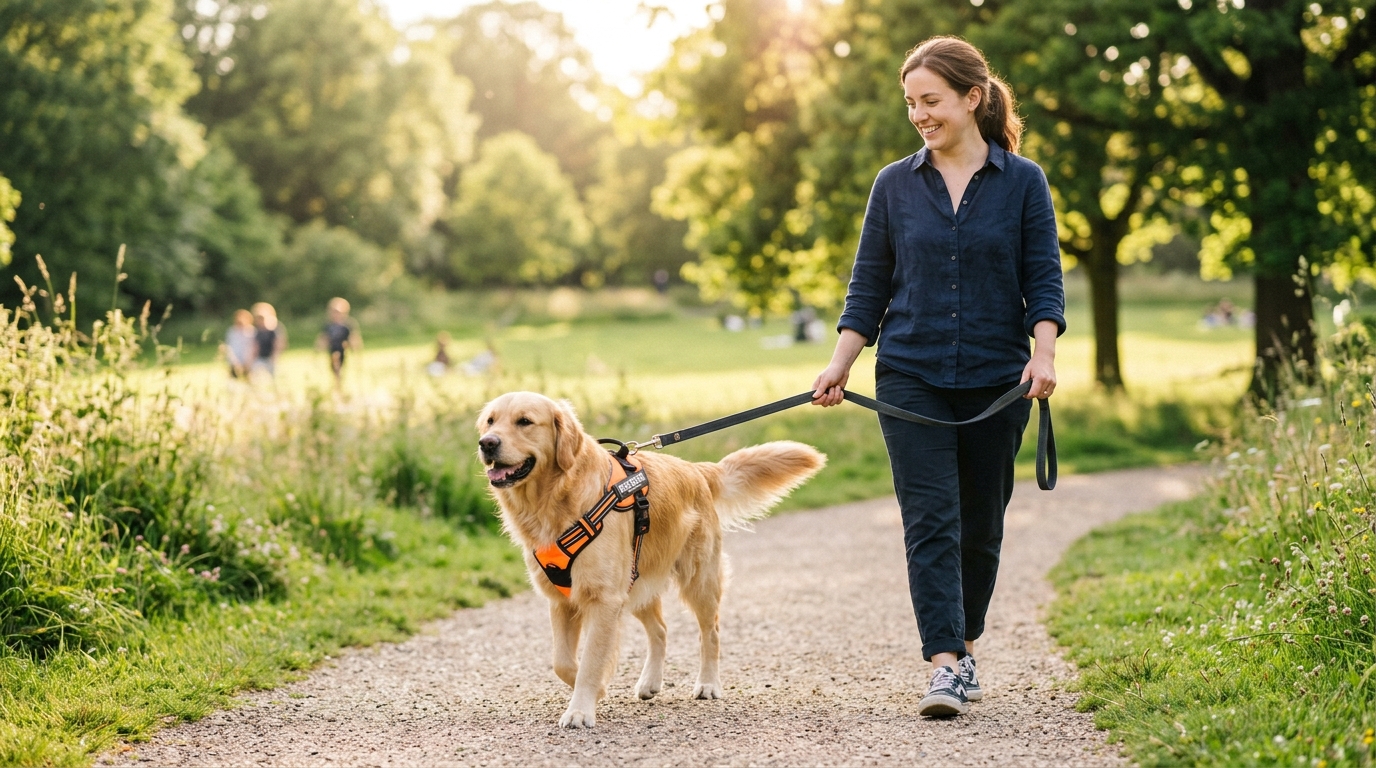
It begins with the jingle of the leash. Ears perk up, claws tap excitedly across hardwood floors, and for thirty blissful seconds, you envision the civilized, scenic stroll promised in classic dog food commercials. Then, the front door opens. A distant squirrel twitches its tail, an intriguing dried autumn leaf skitters across the pavement, and your sweet forty-pound canine suddenly morphs into an unstoppable sled dog running a high-stakes Arctic relay race.
You brace your heels, lean backward at a forty-five-degree angle, and listen in mounting distress to the accompanying audio track: frantic raspy wheezing, dry coughing, and the unmistakable sound of a dog actively suffocating themselves against a narrow flat collar. If daily walks have devolved into an exhausting physical battle that leaves your dog choking and your shoulder aching, you are far from alone. Here is the veterinary science behind canine pulling, why neck-only restraints pose severe physiological hazards, and how ergonomic no-pull harnesses restore calm, pain-free strides for both ends of the leash.
The fragile anatomy of the canine throat
Many pet parents assume a dog’s neck is as rugged and tough as their play style. In reality, the canine cervical region is an intricate biological intersection packed with vital, fragile anatomy that lacks skeletal shielding:
- The Trachea (Windpipe): Formed by delicate C-shaped rings of cartilage closed by a thin dorsal membrane. Repeated concussive pressure from pulling can crack or flatten these rings, leading to Tracheal Collapse—a chronic, irreversible condition causing painful “goose-honk” coughing, respiratory distress, and exercise intolerance. Small and toy breeds (Yorkies, Pomeranians, Chihuahuas, Pugs) are especially prone, but large dogs suffer structural cartilage fatigue just as easily.
- The Thyroid Gland: Positioned on either side of the windpipe right where traditional collars sit. Chronic mechanical trauma from collar impact can induce thyroid inflammation (thyroiditis), prompting the immune system to attack damaged tissue and potentially contributing to hypothyroidism.
- Cervical Spine and Nerves: A dog hitting the end of a six-foot leash at full speed generates kinetic forces several times their body weight. This whip-like shock compresses the cervical vertebrae, pinches peripheral nerves, and can cause chronic neck arthritis and foreleg lameness.
- Intraocular Pressure: Landmark veterinary ophthalmology research demonstrated that dogs pulling against neck collars experience significant, immediate spikes in intraocular eye pressure. For breeds predisposed to glaucoma or with delicate optic nerves, collar pressure is an unrecognized medical hazard.
Why dogs pull: The opposition reflex explained
Humans frequently interpret pulling as canine stubbornness or an attempt at “dominance.” Ethologists know better: pulling is primarily driven by the opposition reflex (scientifically termed negative thigmotaxis). When an animal feels physical pressure pushing or pulling against its body, its instinctive neurological reflex is to lean into that pressure to maintain equilibrium.
When a flat collar tightens against your dog’s throat, their brainstem does not register, “I should slow down so I can breathe.” Instead, the sensory feedback triggers survival software: “Something is restricting my movement; I must push forward with greater force to escape.” Yelling or jerking the leash only amplifies the tension, locking dog and guardian into a vicious cycle of pulling and choking.
How ergonomic harnesses change the mechanics
An appropriately designed harness does not just stop choking; it fundamentally alters the physics of walking. Instead of concentrating kinetic energy onto a 1-inch band around the delicate throat, a chest-vest harness distributes that energy across the broad, muscular pectoral shelf and the rigid ribcage.
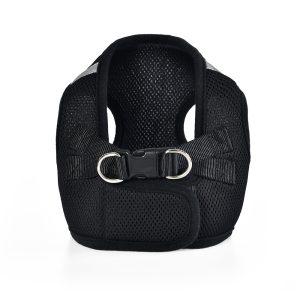
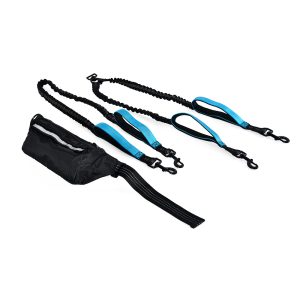


Tailrific offers two purpose-engineered walking gear solutions built to transform high-stress walks into cooperative, enjoyable adventures:
- Tailrific No-Pull Outdoor Reflective Dog Vest Harness (SKU: PLEP-DL003): Engineered with an ergonomic chest plate lined with breathable, cushioned air-mesh that cushions against sudden lunges. Features dual leash attachment points: an everyday back D-ring for relaxed walking and a front-chest redirection clip that turns your dog’s forward momentum sideways whenever they attempt to surge ahead. High-visibility 3M reflective trim keeps pre-dawn and evening strolls safe along vehicle corridors.
- Tailrific Hands-Free Bungee Running Leash & Adjustable Waist Belt Set (SKU: PLEP-DL005): The perfect companion for active walkers and runners. Features heavy-duty dual bungee shock absorbers that expand to absorb up to 70% of sudden pulling jolts, saving your wrists, elbows, and lower back from jarring impacts while providing a gentle tactile buffer for your pup.
Front-clip vs. back-clip: When to use each
Modern harnesses generally offer two leash attachment rings. Knowing when to utilize each is the secret to accelerated loose-leash training:
- The Front-Chest D-Ring (Active Training & Redirection): When your dog pulls while clipped to their chest, the leash creates a natural pivot point. As they surge forward, the harness gently pivots their torso back toward you, breaking their forward eye contact with whatever triggered the lunge (a squirrel, another dog, a jogger). They quickly realize that pulling gets them turned around rather than moving forward.
- The Back D-Ring (Casual Walking & Hiking): Ideal for dogs that have already mastered polite walking manners, as well as for outdoor running, trail hiking, and car safety tethering. The back clip keeps the leash elevated above their front paws to prevent tripping.
Does this mean you throw away the collar?
Not at all. Standard flat collars remain an indispensable piece of pet gear—for holding identification tags, rabies vaccination medallions, and municipal licenses. The modern veterinary consensus is straightforward: use the collar for ID, and use the harness for the leash. Fitting both ensures your dog carries their identity at all times while keeping their airway 100% liberated during outdoor movement.
The two-finger fit check
Even the finest harness will cause chafing or allow escapes if adjusted incorrectly. Perform the classic Two-Finger Test: with the harness buckled on your standing dog, you should comfortably slide two fingers between any strap and your dog’s body. If you cannot fit two fingers, it is too tight and will restrict shoulder mobility; if you can fit an entire flat hand, your dog may be able to back out of the harness when startled.
A peaceful walk awaits
Daily walks are supposed to be the sensory highlight of your dog’s day—an opportunity to sniff, explore, decompress, and bond with you. By retiring throat-choking neck tension and adopting a comfortable, body-contouring harness, you protect their lifelong respiratory health and turn every neighborhood outing into a harmonious, tail-wagging adventure.