
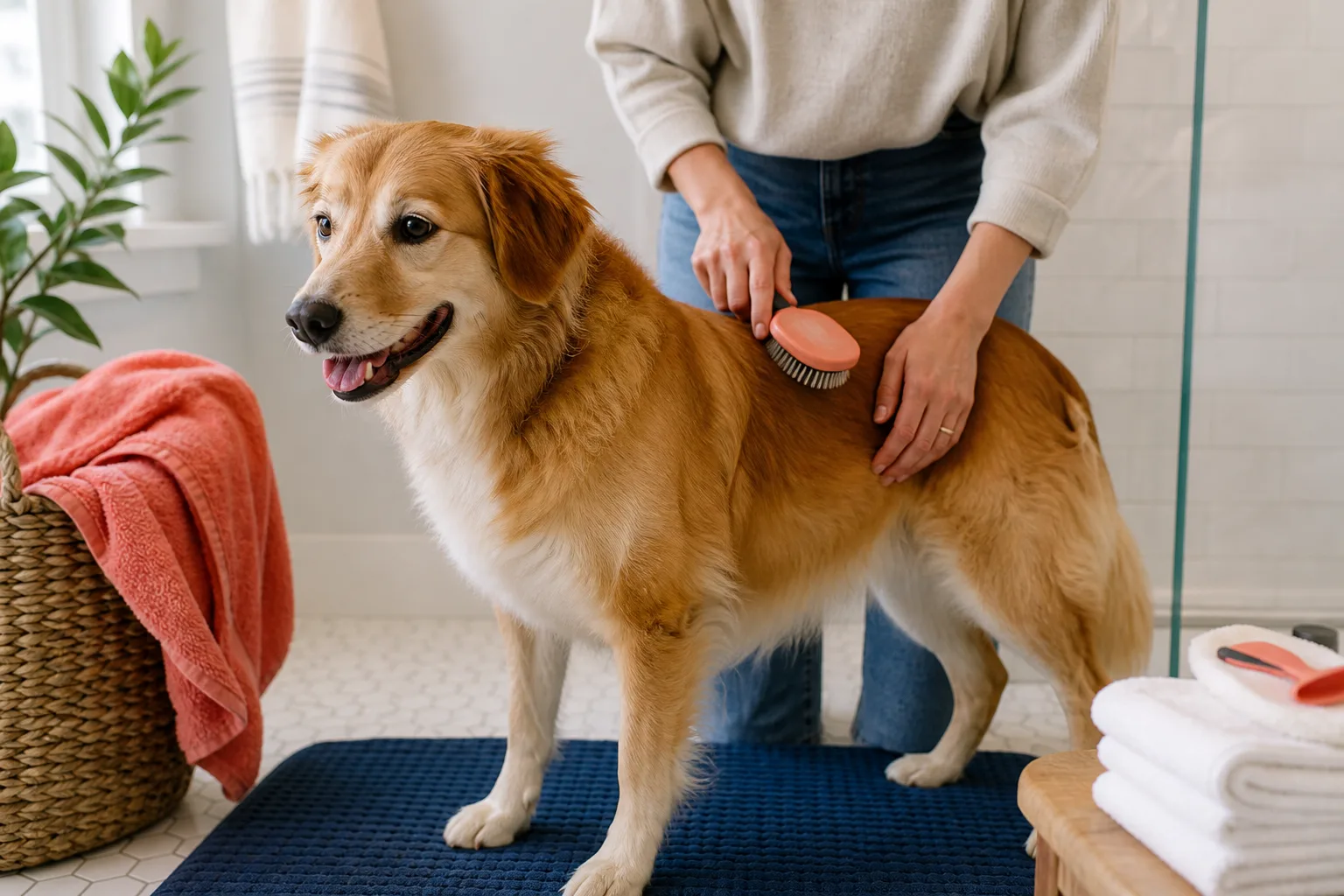
Your dog does not smell bad. Your dog smells like a series of excellent decisions involving grass, dust, and one damp object nobody else noticed. At-home grooming can keep coats, paws, and nails more manageable—but the goal is routine care, not recreating a salon while your dog files a complaint with management.
The best grooming session is usually shorter, calmer, and less ambitious than the one in your imagination. Prepare the tools, work in stages, reward cooperation, and stop before discomfort turns the bathroom into an action sequence.
Start with an inspection, not a makeover montage
Run your hands over the coat and check for mats, wounds, redness, swelling, parasites, unusual lumps, tenderness, or areas your dog does not want touched. Grooming should not conceal a medical problem. Contact your veterinarian for painful skin, open wounds, sudden hair loss, persistent itching, strong ear odor, discharge, or another concerning change.
Brush first; future you will send a thank-you card
Regular brushing removes loose hair, spreads natural oils, and helps prevent tangles. Work gently in the direction of hair growth and support the skin near a tangle instead of pulling. Dense mats can trap moisture and sit extremely close to the skin. Do not slide scissors underneath a tight mat; skin may be pulled into it. A professional groomer or veterinarian is the safer choice when matting is severe, painful, or beyond your experience.
Introduce the clipper like it is a suspicious new coworker
- Let your dog see and sniff the powered-off tool.
- Turn it on at a distance, reward calm behavior, and end the session.
- Touch the handle—not the blade—to the body briefly so vibration becomes familiar.
- Use the correct guide comb and make short passes only when your dog is relaxed.
- Check the blade temperature frequently and keep electrical parts dry.
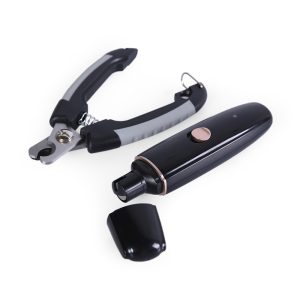
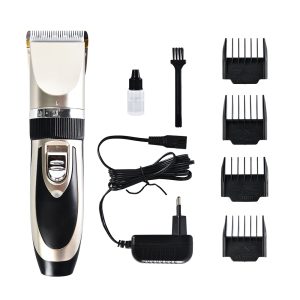


The Tailrific Electronic Pet Grooming Kit includes 3, 6, 9, and 12 mm guide combs plus a detachable titanium-alloy and ceramic blade. Very long or thick coats should be shortened carefully first to reduce the chance of jamming, and the blade should be cleaned according to the supplied instructions. The Tailrific Pet Nail Scissors and Polisher Set combines a manual tool with an electric grinder for short, controlled nail-care sessions.
Nail day: remove millimeters, not confidence
Handle paws for a few seconds at a time before introducing a clipper or grinder. Reward relaxed behavior. Remove only a small amount from each nail and be especially cautious with dark nails, where the quick is harder to see. Keep pet-safe styptic powder nearby. If bleeding does not stop promptly, or if you are unsure where to cut, contact your veterinarian or a professional groomer.
Fear is information, not disobedience
Panting, drooling, trembling, freezing, cowering, repeated escape attempts, growling, or snapping mean the session needs to stop. Do not pin a frightened dog down to finish the last paw. Force can increase fear and injury risk for everyone. Ask a veterinarian, qualified groomer, or credentialed behavior professional for a lower-stress plan.
Clean the tools before they develop their own coat
Remove loose hair and nail dust after use. Detach and clean blades as directed, allow parts to dry, and store tools where pets and children cannot reach them. Inspect cords, guards, blades, and grinding surfaces before the next session. A damaged tool does not become safer because the dog is already on the towel.
The realistic grooming victory
Maybe today you brush half the dog and touch three paws. That still counts. Calm repetition builds a routine more effectively than one heroic battle. Keep the sessions short, respect the dog’s signals, and let “good enough for today” be a professional-grade decision.