
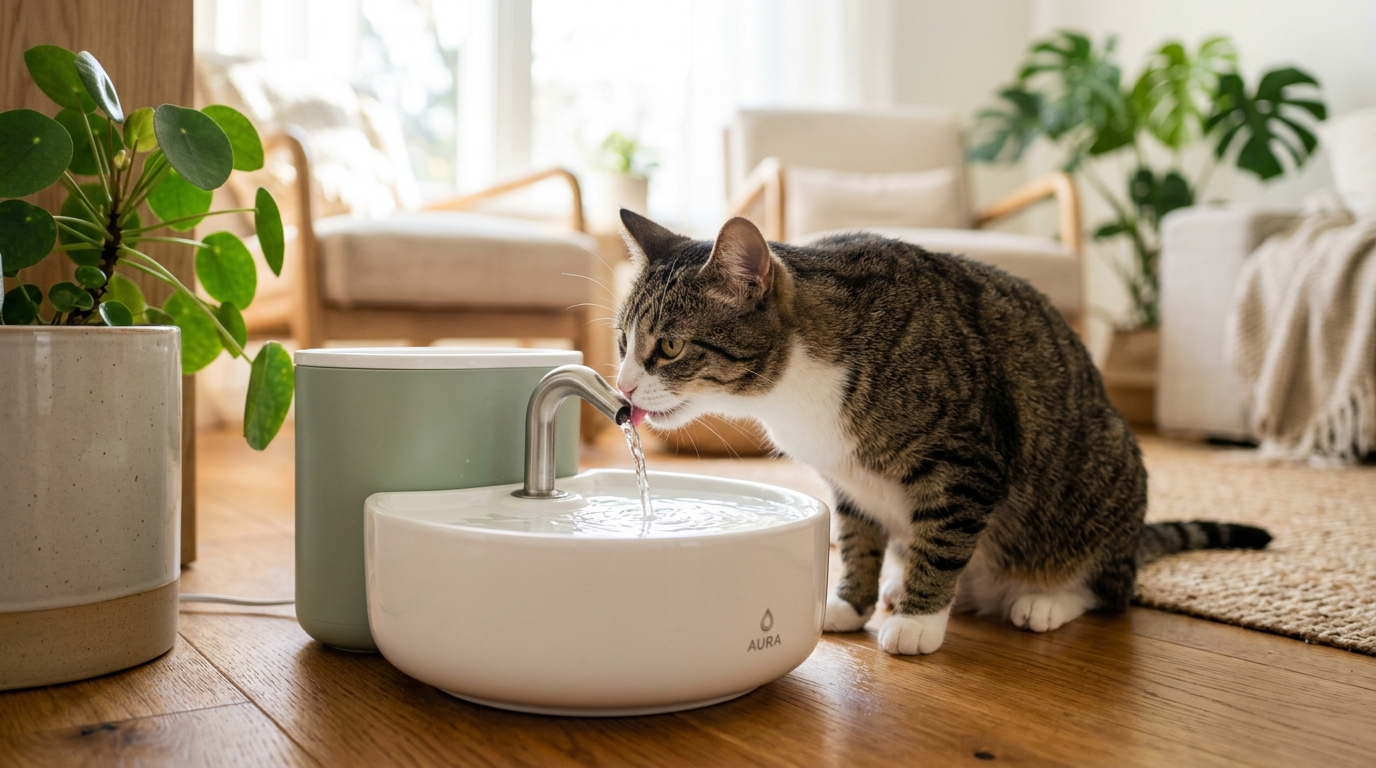
Your cat treats the still water bowl like an unsolved crime scene and the bathroom sink like an all-inclusive cocktail lounge. You fill a clean ceramic bowl with chilled, filtered water; your cat approaches with extreme caution, dips one testing paw, glares at you in utter betrayal, and trots off to wait beside the bathtub faucet for live service. Feline hydration is rarely a matter of stubbornness—it is millions of years of evolutionary survival code in action.
In the wild, standing water is frequently stagnant, warm, and laden with bacteria, while moving streams signal freshness, oxygen, and safety. When you pair wild ancestry with low natural thirst drives and sensitive facial whiskers, a standard kitchen water bowl often fails the feline performance review. Here is how to understand your cat’s hydration instincts, prevent chronic low-moisture habits, and upgrade their water routine without endless sink negotiation.
Why still water looks like a trap to feline instincts
Domestic cats descend from desert-dwelling wildcats (Felis lybica), which obtained the vast majority of their moisture directly from freshly caught prey. Because their natural thirst drive is low, cats do not feel the urgent impulse to drink until their hydration levels have already dropped significantly. When they do seek water, instinct tells them that still, stagnant pools in warm corners are prime territory for bacterial growth and contamination.
Furthermore, cats have remarkably poor near-field vision within 10 to 12 inches of their noses. Still water in a flat bowl is nearly invisible to them without surface movement. This explains why many cats compulsively paw at the bowl, splash water across the kitchen floor, or push the dish across tiles before taking a single sip—they are attempting to gauge the water’s depth and confirm that the surface is moving.
Whisker fatigue and the dinner-bowl collision
A cat’s whiskers (vibrissae) are not merely facial hair; they are finely tuned sensory receptors packed with proprioceptors that detect microscopic air currents, spatial boundaries, and textures. When a cat is forced to submerge their face into a narrow, high-sided cup or bowl, their whiskers are continuously bent against the rigid rim. This repetitive tactile overload—often referred to as whisker fatigue—can cause cats to pace nervously, flip their bowls, or abandon drinking altogether.
Location is another common household misstep. Placing the water bowl directly beside the food bowl seems logical to humans, but feline instincts rebel against it. In nature, prey carcasses can contaminate nearby water sources. Cats instinctively prefer their water station placed in a separate, quiet area of the room where they have a clear 360-degree view of their surroundings while drinking.
Moving water: The difference between stagnant and sip-worthy
An automatic pet water fountain solves the sensory and evolutionary barriers in one stroke. Constant circulation creates surface tension, audible bubbling, and light reflections that a cat can easily detect without pawing. Moving water also continuously oxygenates the reservoir, preventing the stale, flat taste that develops when water sits motionless in a bowl for hours.
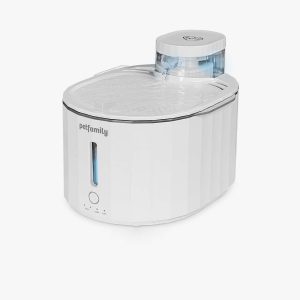

The Tailrific 2.5L Ultra-Quiet Pet Water Fountain (SKU: PLCJ501) is engineered specifically for feline physiology. It features a generous 2.5-liter (85 oz) reservoir, a wide whisker-friendly drinking tray, and a multi-layer filtration system combining high-density micropore cotton, coconut-shell activated carbon, and ion-exchange resin to capture stray hair, dust, and heavy metals. Operating at under 30 decibels, the whisper-quiet submersible pump provides steady, oxygen-rich running water without humming or vibrating.
How to introduce a fountain without alarming the resident skeptic
Cats are creatures of strict routine. A sudden whirring machine appearing in their territory may trigger intense suspicion rather than immediate hydration. Introduce the fountain with patience:
- Step 1: Unpowered familiarization. Set up the fountain in their preferred spot filled with water, but leave it unplugged for the first 24 to 48 hours so your cat can sniff and inspect the new fixture at their own pace.
- Step 2: Maintain a backup source. Never remove their old familiar water dish immediately. Place the fountain a few feet away from the original bowl until you observe your cat drinking consistently from the fountain.
- Step 3: Start with gentle bubbling. When powering on for the first time, choose the gentle bubbling spring mode rather than a high-arc faucet stream to prevent startle responses.
- Step 4: Positive association. Offer high-value treats or verbal praise whenever your cat investigates the fountain willingly.
Maintenance: Biofilm is not a mineral
A fountain is not a “set-it-and-forget-it” appliance. Saliva, airborne dust, and trace minerals naturally form a transparent, slippery bacterial layer known as biofilm along pump impellers and plastic basins if neglected. Maintain your fountain on a predictable schedule:
- Weekly: Disassemble the fountain, rinse the pump cavity and impeller, and wash the water basin with mild dish soap and warm water.
- Bi-weekly: Soak plastic and silicone components in a 1:1 mixture of warm water and white vinegar to dissolve calcium and hard-water buildup, followed by a thorough rinse.
- Monthly: Replace the activated carbon filter cartridge to ensure optimal odor adsorption and water purity.
When hydration habits signal a veterinary conversation
Adequate water intake is essential for preventing feline lower urinary tract diseases (FLUTD), painful crystal formation, and supporting long-term kidney function—particularly for cats eating an exclusive dry kibble diet. However, dramatic shifts in water consumption should never be ignored.
If your cat suddenly begins drinking compulsively in huge volumes (polydipsia), visits the water bowl dozens of times a day, shows dry sticky gums, exhibits lethargy, or strains in the litter box, consult your veterinarian promptly. Sudden excessive thirst can be an early indicator of diabetes, hyperthyroidism, or chronic kidney disease (CKD), while straining to urinate is a life-threatening medical emergency.
A better hydration routine for feline royalty
Giving your cat fresh, moving water honors their wild instincts while protecting their urinary and kidney vitality for years to come. Choose wide basins, separate water from meals, keep the reservoir spotless, and let the gentle stream do the talking. Less faucet negotiation. Healthier kidneys. More Tailrific moments.
{ “@context”: “https://schema.org”, “@type”: “FAQPage”, “mainEntity”: [ { “@type”: “Question”, “name”: “Why do cats prefer drinking from running water or faucets?”, “acceptedAnswer”: { “@type”: “Answer”, “text”: “Cats are evolutionarily programmed to avoid standing water because in the wild, stagnant pools often harbor dangerous bacteria and parasites. Flowing water is aerated, cooler, and cleaner. Additionally, cats have poor close-up vision, making moving water much easier to see and locate.” } }, { “@type”: “Question”, “name”: “What is whisker fatigue in cats?”, “acceptedAnswer”: { “@type”: “Answer”, “text”: “Whisker fatigue occurs when a cat’s highly sensitive whiskers repeatedly brush against the narrow sides of a deep water or food bowl. This constant nerve stimulation causes stress and discomfort, prompting cats to avoid drinking or push their bowls.” } }, { “@type”: “Question”, “name”: “Where is the best place to put a cat’s water fountain?”, “acceptedAnswer”: { “@type”: “Answer”, “text”: “Place cat water fountains in quiet, low-traffic areas away from both their food bowl and the litter box. In nature, cats do not drink near their hunting grounds or toileting areas to avoid contamination.” } }, { “@type”: “Question”, “name”: “How often should you clean a pet water fountain?”, “acceptedAnswer”: { “@type”: “Answer”, “text”: “Pet water fountains should be completely disassembled and washed with warm soapy water at least once a week to prevent the buildup of bacterial biofilm. Filters should be replaced every 3 to 4 weeks.” } } ] }