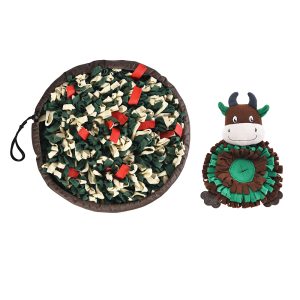
Every dog owner knows the feeling of walking three brisk miles in the evening, only to return home and find their dog staring expectantly with a toy in their mouth. Physical exercise builds cardiovascular stamina; the more you walk or run your dog to tire them out, the more athletic endurance they develop. What dogs often lack after a structured leash walk is not physical exhaustion, but sensory and cognitive fulfillment.
A dog’s primary window into the world is their olfactory system. While human retinas possess roughly 6 million photoreceptors, a dog’s nasal cavity holds between 125 million and 300 million olfactory receptors. Activating this incredible sensory hardware requires focused concentration, rapid neural processing, and active problem-solving. Canine behavioral scientists frequently observe that just 15 to 20 minutes of dedicated scentwork burns more mental energy and promotes deeper post-exercise relaxation than miles of monotonous sidewalk jogging.
How olfactory puzzles trigger canine relaxation
When a dog engages in “sniffing mode” (nose work), their respiratory pattern switches from rapid panting to steady, rhythmic nasal inhalations. This deep olfactory rhythm activates the parasympathetic nervous system—the biological circuit responsible for “rest and digest.” Cortisol levels decrease, dopamine and serotonin surge, and nervous behavioral arousal drops dramatically.
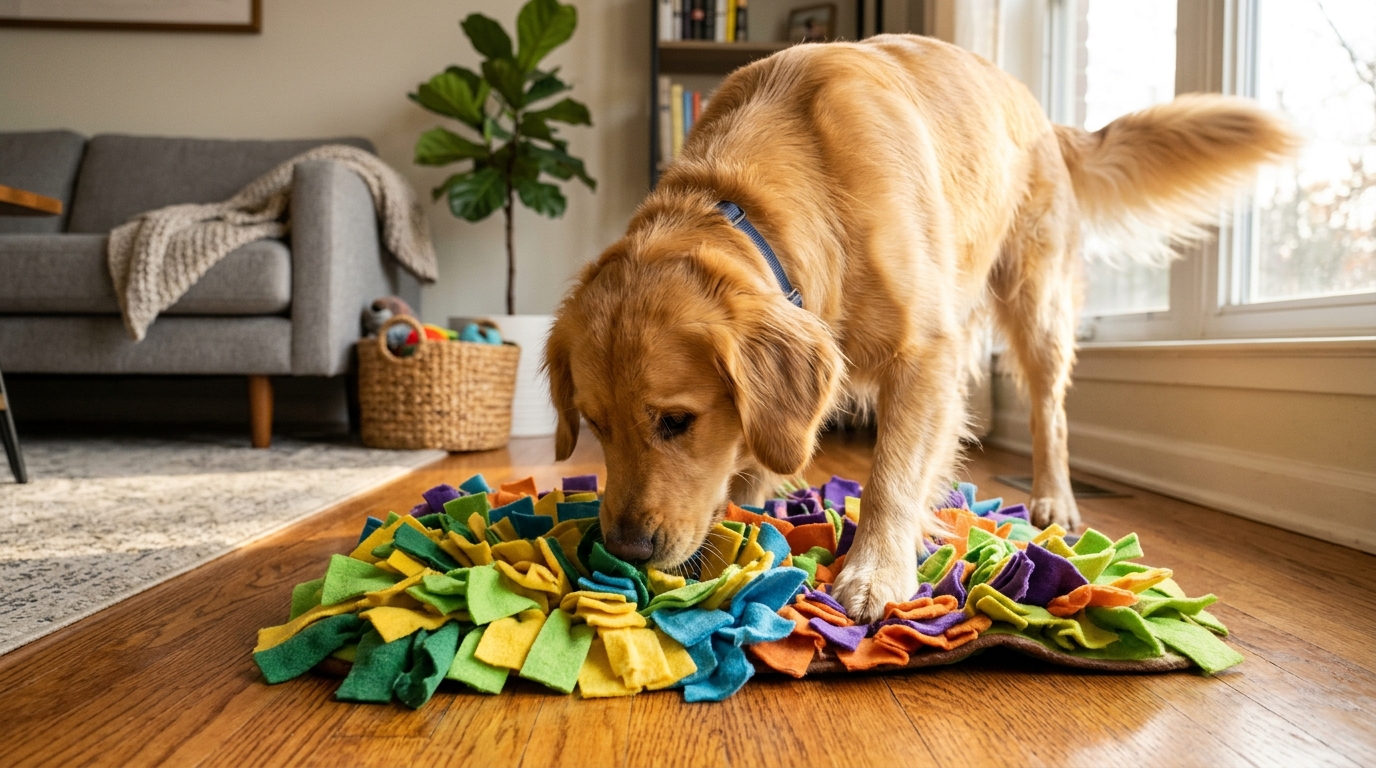
Unlike high-arousal games like repetitive tennis ball fetching—which can inadvertently spike adrenaline and leave high-drive dogs in a state of hyper-vigilance—snuffle mats demand meticulous patience. Dogs must gently nudge aside dense fleece petals, tease open folded fabric cups, and use tactile dexterity to earn their rewards. Once the session ends, dogs routinely stretch out on their beds and sigh into deep, restorative REM sleep.
Taming the speed eater: Snuffle mats as daily feeders
If your dog vacuums up their breakfast in twenty seconds flat, you are likely all too familiar with immediate coughing or digestive discomfort. Fast eating causes dogs to swallow excess air (aerophagia), which can lead to uncomfortable abdominal distension and gas.
Dumping standard dry kibble into a multi-tiered snuffle mat transforms dinner into an immersive foraging adventure. By scattering a single cup of dry food across textured fleece frills and hidden puzzle pockets, you naturally stretch eating time from seconds to a calm, enriching 12 to 18 minutes. Dogs finish their meal mentally satisfied and physically settled.
Best practices: Training focus without frustration
To ensure your dog enjoys their snuffle mat safely without resorting to shaking or tearing the fabric:
- Start on “Easy Mode”: During the first two sessions, sprinkle treats directly on top of the outer fleece petals in plain sight. Let your dog discover the game with zero barrier to entry.
- Gradually Increase Depth: Once your dog understands that the mat dispenses treats, push kibble deeper down between the dense fabric layers and inside folded corner pockets.
- Supervise and Remove: A snuffle mat is an active foraging puzzle, not a chew toy. Once your dog has sniffed out the last treat, calmly say “All Done,” trade with a tiny treat, and store the mat out of reach.
- Easy Washing: Choose mats with non-slip silicone bottoms and machine-washable fleece construction to keep feeding areas fresh and sanitary.
Explore the Tailrific enrichment collection
Upgrade your rainy day routine and dinner ritual with our veterinary-approved foraging mats and interactive mental enrichment tools: