
You clip on the leash, grab your keys, and your dog is already celebrating as if you announced a cross-country expedition. Even an ordinary neighborhood walk can feel like the best event of the week. That enthusiasm is wonderful, but it also makes it easy to overlook a basic need: reliable access to clean drinking water. Planning ahead can make warm walks, park visits, and day trips more comfortable and less stressful for both of you.
Panting is not a hydration strategy
Dogs regulate heat differently from people. They rely heavily on panting, and activity, warm weather, direct sun, humidity, age, body size, coat type, and individual health can all affect how quickly they become uncomfortable. There is no single walk length or temperature that is automatically safe for every dog. A calm senior dog and a young dog who treats every squirrel sighting as a personal invitation may need very different pacing and water breaks.
The goal is not to force a specific amount of water during every outing. It is to make water available before your dog becomes overly thirsty and to watch how your individual dog responds. Offer small opportunities to drink during longer walks, strenuous play, travel, or warm conditions. If your dog rarely drinks away from home, practice with the travel container in a calm setting so the setup is familiar before you need it.
Prepare before the leash becomes a full-body celebration
Begin with an ordinary pre-walk check. Make sure your dog has access to fresh water at home, choose a route with shade when possible, and consider the hottest part of the day before heading out. On warm days, early morning or evening walks may be more comfortable. Check pavement with the back of your hand and shorten the route when the surface or air feels uncomfortably hot. Hydration supports the plan, but it does not make excessive heat safe.
- Bring more than you expect to use. Delays, detours, and shared sips can empty a small bottle quickly.
- Use a clean drinking surface. A dedicated tray or bowl is easier to control than an unknown public container.
- Plan the return trip. Save enough water for the final part of the walk or drive home.
- Pack for the conditions. Shade, rest breaks, and a cooler route matter alongside water.
Choose gear you can use while holding a leash and your dignity
A travel bottle should be simple enough to use while you are holding a leash. Look for a capacity that fits the length of the outing, a drinking surface your dog can comfortably reach, and a closure that is easy to check before it goes into a bag. A design that returns unused water to the bottle can reduce waste when your dog takes two polite laps and then becomes deeply interested in a nearby leaf. Always inspect the seal and carry the bottle upright when practical.
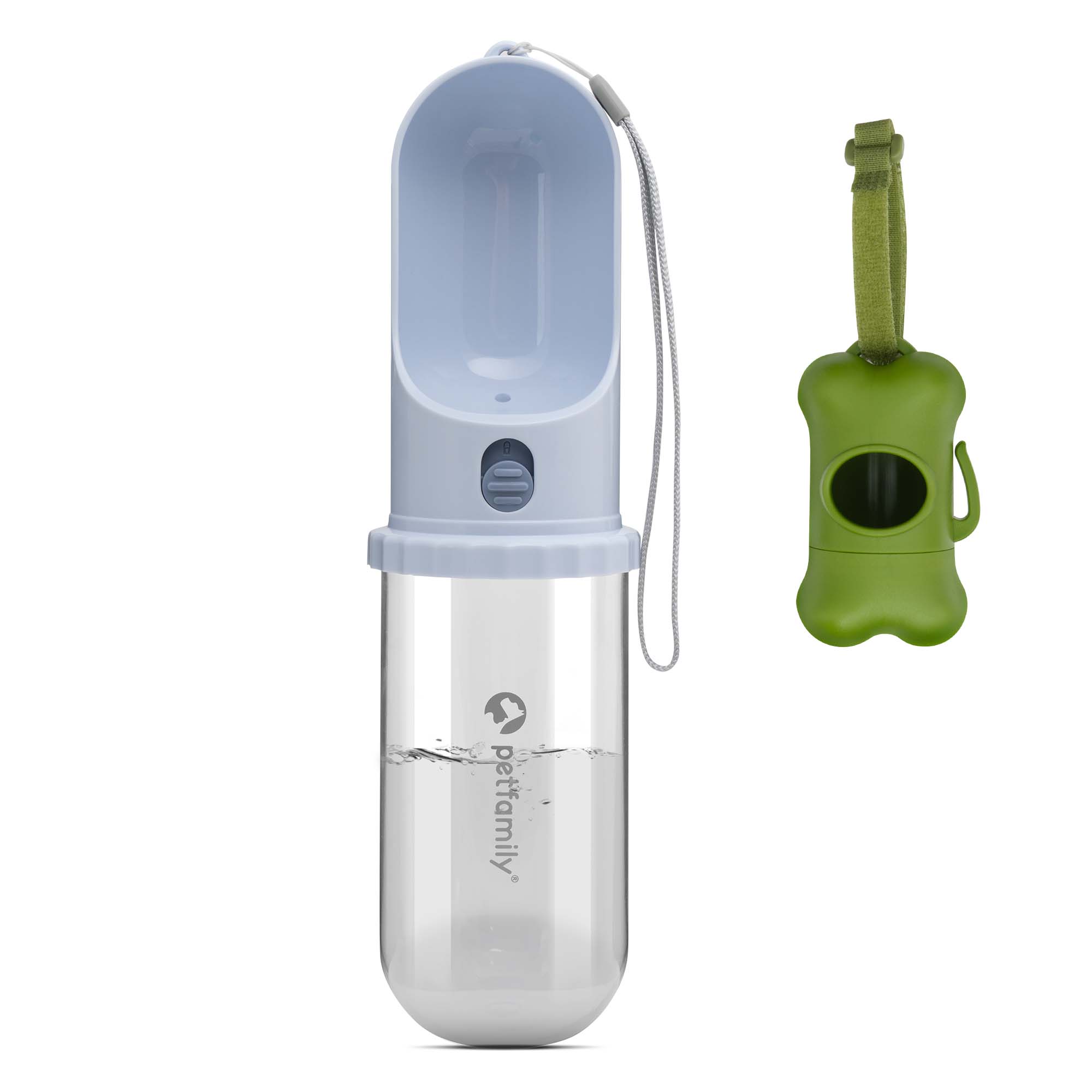
The Tailrific Portable Pet Water Bottle has a 450 mL capacity, a sliding drinking tray, and one-button water release and return. It is a convenient option for everyday walks and travel when that capacity is appropriate for your pet and plans. Clean it according to the product instructions, refill it with fresh water, and confirm the button and seal are working before each outing. For long trips or multiple pets, bring additional water rather than relying on one bottle.
Take breaks before your dog files a formal complaint
Offer water during natural pauses instead of waiting for your dog to appear exhausted. A shaded corner, park bench, or quiet place away from traffic gives your dog time to settle and drink. Let your dog choose whether to drink; do not pour water into the mouth or force rapid intake. After energetic exercise, allow a brief calm-down period and offer manageable amounts while you monitor breathing and comfort.
Pay attention to changes from your dog’s normal behavior. Excessive panting, weakness, confusion, vomiting, collapse, unusually thick saliva, or difficulty recovering after rest can signal an urgent problem. Move to a cooler area and contact a veterinarian promptly if you are concerned. Suspected heatstroke is an emergency. General hydration tips are useful for planning, but they cannot replace veterinary guidance for a dog who seems unwell.
Nobody ordered swamp-flavored water
Empty leftover water after the outing and wash every surface your dog drinks from. Pay attention to seams, valves, and corners where moisture can remain. Allow the parts to dry fully before storing them. If the bottle develops damage, an odor that does not wash away, or a seal that no longer holds, replace it. Clean equipment is part of providing clean water; the two belong together like a leash and the sudden need to inspect every mailbox.
The glamorous conclusion: make it a habit
Good hydration planning is mostly a repeatable habit: check the weather, choose a reasonable route, fill the bottle, offer water during breaks, and watch your dog. Those steps are not complicated, which is exactly why they work. When the basics are prepared, you can spend less time worrying about what you forgot and more time enjoying the walk your dog has been enthusiastically requesting since breakfast.