
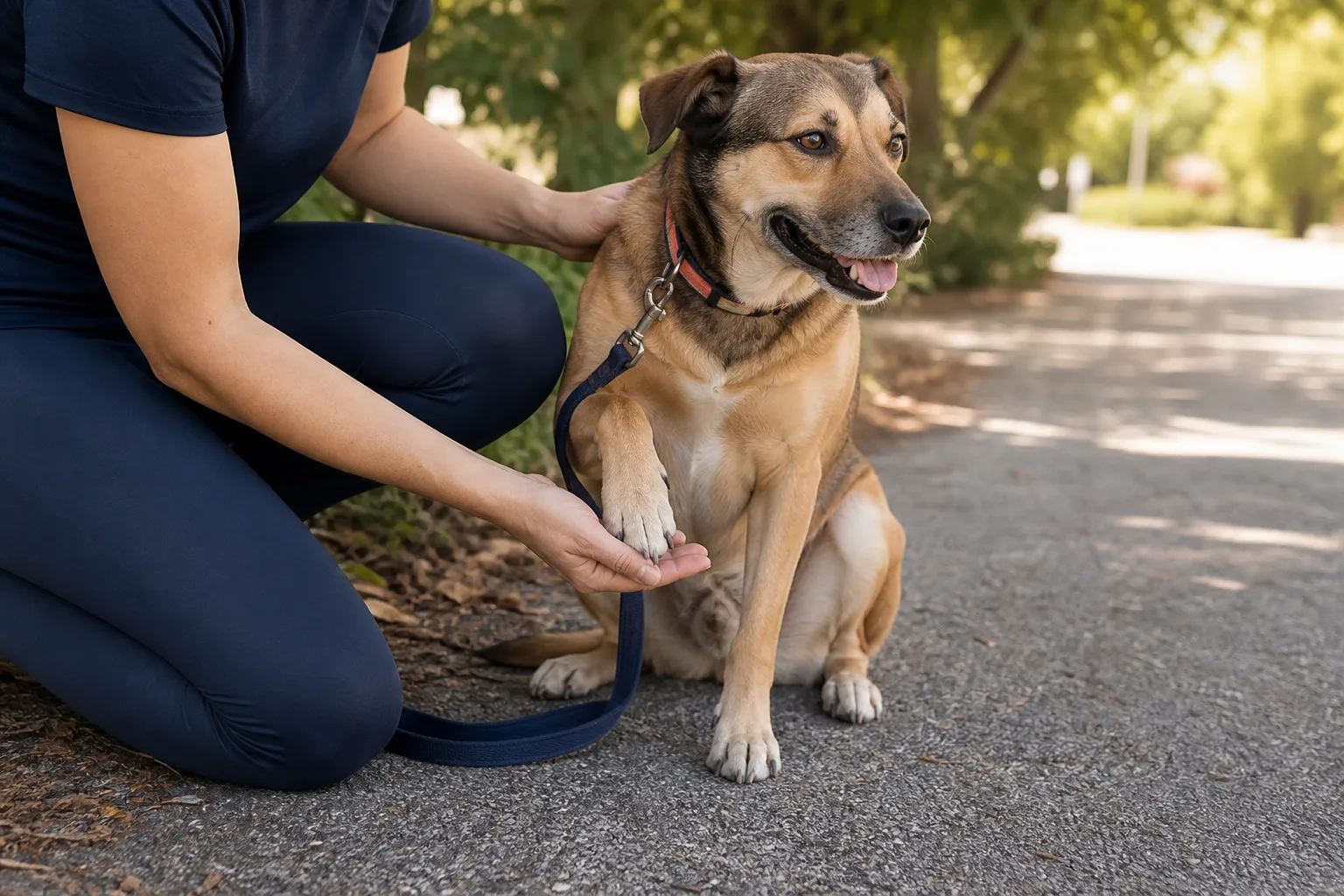
Your dog sees a sunny sidewalk and thinks: adventure. The sidewalk may be thinking: preheated skillet. Add rough trails, burrs, road salt, ice, and mystery debris, and suddenly those four paws are doing far more risk assessment than their owner with the weather app.
Paw protection starts before the shoes. The first decision is whether the route, surface, and conditions are comfortable enough for the walk at all. Boots can help in the right situation; they cannot negotiate with unsafe pavement.
The sidewalk is lava—occasionally for real
Air temperature and surface temperature are not the same thing. Sun-heated asphalt, concrete, sand, and metal can become much hotter than the air. Choose cooler hours, look for shade or grass, and shorten or skip the walk when conditions are uncomfortable. In winter, watch for ice, packed snow, road salt, and chemical deicers.
Before leaving, look for cuts, swelling, tenderness, cracked pads, or material trapped between the toes. If your dog is already limping, guarding a paw, or licking it repeatedly, pause the adventure and contact your veterinarian when appropriate. A boot should not be used to hide a problem that needs attention.
When four tiny shoes actually earn their closet space
- Rough or debris-covered ground where extra pad protection is appropriate.
- Cold walks involving ice, packed snow, or treated sidewalks.
- Warm surfaces only after you have already adjusted the timing, route, and duration.
- Veterinary-directed protection during recovery, following the veterinarian’s exact instructions.
Fit beats fashion—even when the fashion is spectacular
Measure the widest part of each weight-bearing paw while your dog is standing. Measure front and rear paws because nature enjoys inconsistency. The boot should stay secure without pinching toes, restricting circulation, rubbing the dewclaw, twisting, or sliding off. Use the product’s paw measurements as the primary guide; body weight is only a secondary reference.
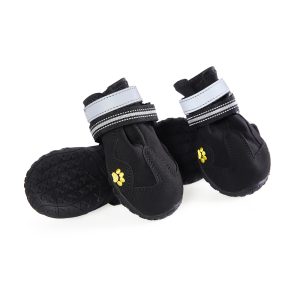
%20–%20Size%203&url=https://www.tailrific.com/product/all-weather-anti-slip-dog-boots-set-of-4-size-3/&media=https://www.tailrific.com/wp-content/uploads/tailrific-products/ep-dj001/1.jpg)
The featured Tailrific Dog Shoes are a set of four with a split-seam opening, two adjustable reflective straps, and a rugged anti-slip sole. The shown Size 3 is intended for paws matching the Size 3 specifications—not every dog with confidence and a calendar. Confirm the measurements before ordering and test the fit indoors first.
Welcome to the high-step comedy phase
Let your dog sniff the boots. Touch one to a paw, reward calm behavior, then try one boot for a few seconds. Build gradually toward all four on a nonslip indoor surface. The first walk may look like your dog has suddenly joined a very serious marching band. That reaction is common when the sensation is new; keep sessions short and reward relaxed, natural steps.
- Make sure fur, skin, and dewclaws are not trapped under straps.
- Recheck the fit after several minutes of movement.
- Stop for rubbing, persistent distress, limping, or an abnormal gait that does not quickly improve.
- Remove the boots during breaks and check for moisture, debris, redness, and pressure marks.
The post-walk paw audit nobody posts on Instagram
Wipe away dirt and deicing residue, dry between the toes, and let wet footwear dry completely. Inspect straps and soles before the next use. Contact a veterinarian for burns, cuts, swelling, bleeding, embedded objects, persistent licking, or ongoing limping. Do not apply human pain medication or creams unless your veterinarian specifically directs you to do so.
Comfort wins. The step counter will survive.
The best paw-protection plan is part judgment, part preparation, part fit, and part accepting that your dog may initially walk like gravity has changed. Choose the route wisely, introduce gear slowly, and keep checking the paws. A comfortable dog is the goal; the tiny sneakers are simply one useful tool.