
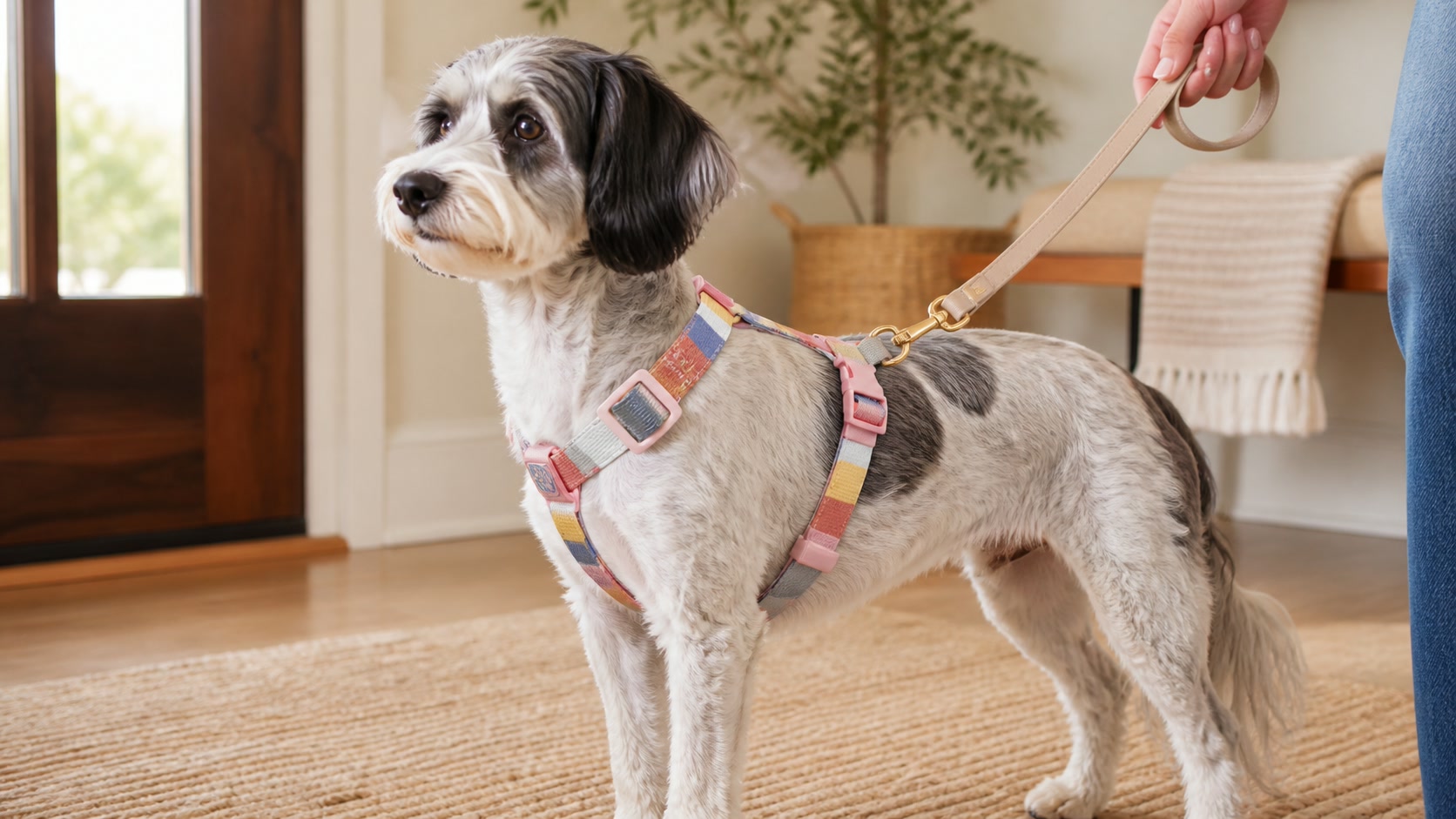
Your dog can turn putting on a harness into interpretive dance: one paw in, one paw out, sudden spin, emotional monologue. The comedy ends once the buckle clicks. A collar or harness must be comfortable, secure, and matched to the dog in front of you—not to a breed guess or an optimistic size label.
Good fit is not a one-time achievement. Puppies grow, coats change, body weight shifts, straps loosen, and yesterday’s perfect adjustment can become today’s escape hatch. Measure first, adjust carefully, and check the gear while your dog stands and moves.
The 30-second fit check
- Collar: measure where the collar normally sits and compare the number with the product’s exact size range.
- Harness: measure the widest part of the chest, usually just behind the front legs, plus any other measurement the product requires.
- Snug, not tight: use the product instructions and confirm you can work about two fingers beneath the straps without pinching.
- Move and test: check shoulder movement, elbow clearance, rubbing, twisting, and whether the dog can back out.
- Recheck regularly: growing puppies, grooming, weight changes, and wet or compressed coats can all change the fit.
Measure the dog, not the résumé
“Small,” “medium,” and breed recommendations are only starting points. Two dogs of the same breed or weight can have different necks, chests, coats, and proportions. Use a soft measuring tape while your dog stands naturally on a level surface. If your assistant is paid in treats, keep the payroll pieces small.
For a collar, measure around the neck where that collar will rest. Keep the tape close without pulling it tight. For a harness, measure the widest part of the rib cage—typically behind the front legs—and follow the maker’s diagram for any neck or length measurement. Compare the actual number with the exact chart for that product; sizing is not universal across brands or designs.
If your dog falls between sizes, do not assume that tighter is more secure. Choose a design and adjustment range that can sit securely without restricting breathing or movement. When the chart or fit is unclear, ask the seller, your veterinarian, or a qualified trainer for help before using the gear outdoors.
The two-finger rule is a check, not a magic spell
A common starting check is that roughly two fingers can fit beneath a collar or harness strap. The gear should not pinch, press on the throat, or leave deep marks, but it also should not hang loosely or slide over the head. Finger sizes, coat thickness, and gear designs vary, so pair this check with the product instructions and an escape test.
After adjustment, gently test the gear in several directions. A collar should not slip over the ears. A harness should not rotate freely, gape at the neck, or slide over the head when the dog backs up. Do this first indoors or in a securely enclosed area—not beside the road while your dog notices the neighborhood squirrel ambassador.
Shoulders need room to do their job
Watch your dog walk, turn, sit, and lie down. Harness straps should not cut into the armpits, rub behind the elbows, or interfere with the front legs reaching forward. Look for shortened steps, stiffness, repeated scratching at the gear, or reluctance to move.
Remove the gear and inspect the skin and coat. Redness, hair loss, pressure marks, swelling, or repeated licking can mean the fit or design is wrong. Stop using equipment that causes pain, breathing changes, coughing, persistent rubbing, or altered movement, and contact your veterinarian when symptoms continue or you are concerned.
A practical starting point for measured chest fit
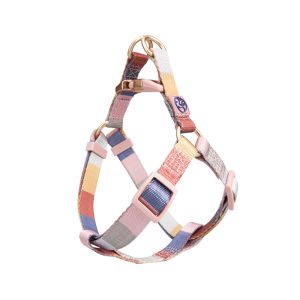
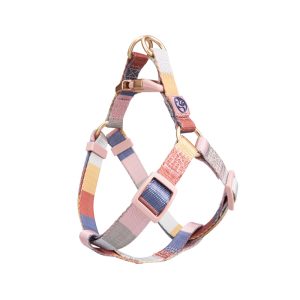


The Morandi Pastel Adjustable Dog Harness is a step-in chest harness offered in two current Tailrific sizes. Small lists a chest-girth range of 14.2–19.7 inches (36–50 cm) with a 0.6-inch (1.5 cm) strap. Medium lists 17.3–25.2 inches (44–64 cm) with a 0.75-inch (2.0 cm) strap.
Use the measured chest range—not the broad weight or breed suggestion—to choose a starting size. The overlapping ranges do not guarantee that both sizes will fit the same dog; body shape, strap placement, and available adjustment still matter. Check the harness indoors through ordinary movement and return to a different size or design if it rubs, restricts the shoulders, twists, or allows the dog to back out.
Reflective details help visibility; they do not create a force field
Reflective material can make gear easier to see when light reaches it. It does not replace a leash, attentive handling, lighting, a safe route, or appropriate restraint. Inspect buckles, stitching, D-rings, clips, and straps before each walk. Replace equipment that is cracked, frayed, bent, loose, or no longer fastening reliably.
Do not leave a dog unsupervised in a harness or walking collar. Gear can catch on crates, furniture, branches, or another animal. Remove walking equipment when it is not being used unless your veterinarian or another qualified professional has given different instructions for a specific situation.
Recheck before the dog schedules the wardrobe malfunction
Fit can change after a haircut, a bath, seasonal coat growth, weight gain or loss, and ordinary strap movement. Recheck puppies frequently as they grow. For adult dogs, make the buckle-and-strap inspection part of the pre-walk routine.
The useful habit is simple: measure, adjust, move, inspect, and repeat. A good collar or harness is not the one with the most persuasive size label. It is the one that stays secure without pinching, permits natural movement, and keeps passing the check on the dog who actually wears it.
Helpful fit references
For more detail, see the American Kennel Club measuring guide and VCA Animal Hospitals’ guidance on collar and harness options. General guidance cannot replace advice from your veterinarian for an individual dog.