
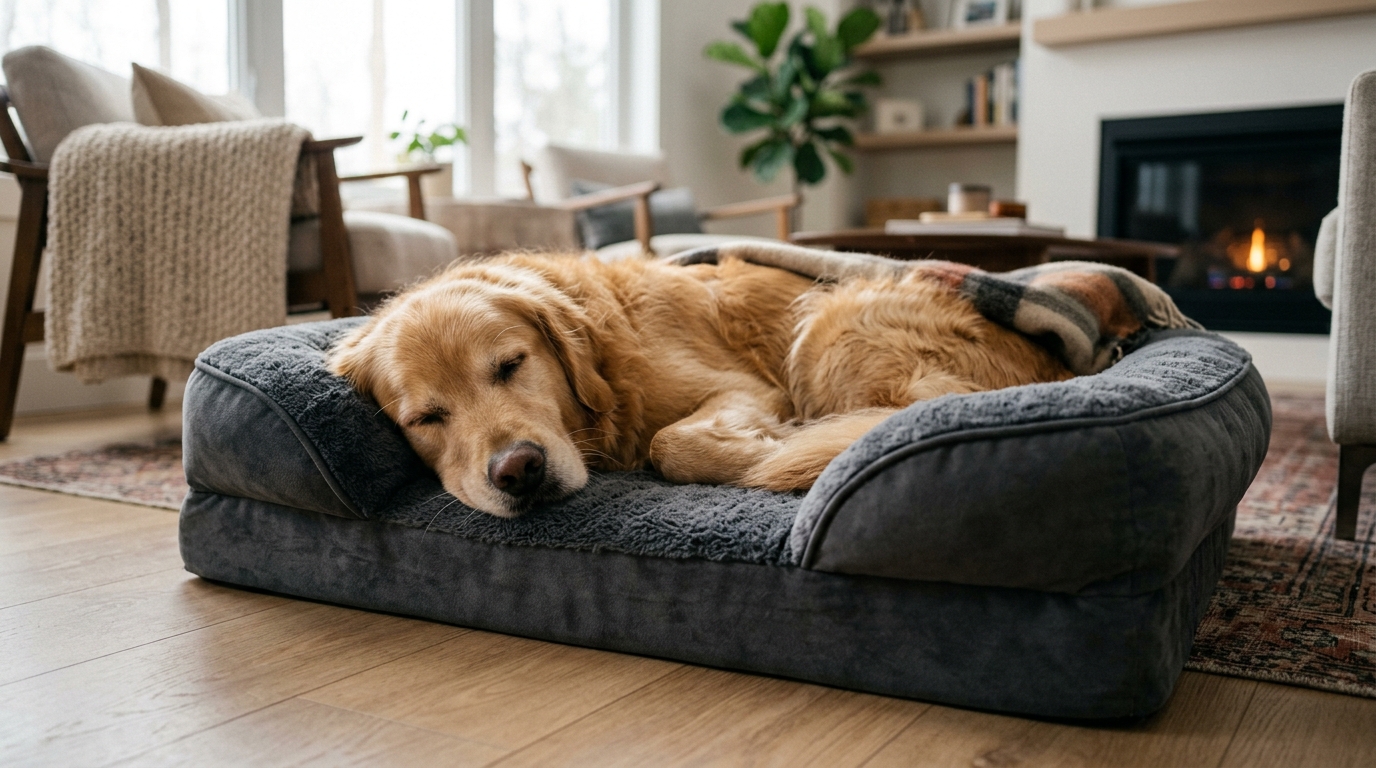
Your dog sleeps between twelve and fourteen hours a day, executing an avant-garde repertoire of physical postures. At 2:00 PM, they are curled into a tight, aerodynamic ball with their nose tucked under their tail. By 4:30 PM, they have migrated to the middle of the hallway, splayed flat on their stomach with hind legs stretched behind them like a flying superhero. At 8:00 PM, they are on their back, all four paws pointed toward the ceiling in complete, uninhibited vulnerability.
While these sleeping contortions make for adorable photo albums, they are also clear biomechanical indicators of how your dog regulates body temperature, monitors ambient safety, and manages physical joint pressure. Unfortunately, when hours of deep sleep take place on thin polyester pads or unforgiving hardwood floors, gravitational pressure takes a relentless toll on canine cartilage, spinal alignment, and resting circulation. Here is what your dog’s sleeping postures mean, why hard surfaces accelerate joint stiffness, and how supportive orthopedic bolster beds provide restorative, pain-free slumber.
Decoding the four classic canine sleeping postures
Canine sleep posture is a dynamic balance between thermal comfort, musculoskeletal relaxation, and environmental awareness. Ethologists categorize the primary sleeping styles into four distinct modes:
- The Donut (Nose-to-Tail Curl): The ancestral posture of wild wolves. Dogs tuck their limbs close to the core and drape their tail over their face. This posture minimizes surface area to conserve vital body heat and physically protects vulnerable abdominal organs from predators. Dogs curling up on cold mornings or in bustling rooms seek thermal insulation and security.
- The Side Sleeper (Relaxed Flank): Dogs lying extended on their side are entering deep REM restorative sleep. This posture exposes the belly and limbs, demonstrating that your dog feels completely safe in their environment. Side sleeping allows joints to rest in neutral extension without bearing compressive weight.
- The Superman (Belly Down, Four Paws Splayed): Common in puppies and high-energy breeds. The dog rests their chest directly against the cooler floor while keeping limbs poised to spring into action at the first rustle of a treat bag or door chime.
- The Crazy Paws / Belly Up (Inverted Vulnerability): Sleeping flat on their spine with paws dangling in the air is the ultimate canine compliment to their household. Because exposing the throat and abdomen represents total surrender, a dog only sleeps belly-up when they feel entirely protected and need to dump excess body heat via sweat glands in their paw pads.
Why hard floors take a toll on canine joints
Hardwood, laminate, and tile floors may feel cool against warm fur, but they offer zero biomechanical shock absorption. When a medium or large dog drops their frame onto a hard surface, their entire skeletal mass collides with unyielding resistance.
Over months and years, gravity concentrates pressure points onto the bony protrusions of the body—specifically the lateral elbows, hip sockets (greater trochanters), and hocks. This constant friction causes elbow calluses and fluid-filled bursitis pockets (hygromas). In mature dogs or breeds genetically predisposed to hip dysplasia, sleeping without dense orthopedic support stiffens synovial joint fluid, causing that heartbreaking morning limp where rising takes agonizing effort.
Why cheap polyester stuffing fails your dog
Many standard department store pet beds look fluffy on the retail shelf, filled with loose polyester batting. Place an 8-pound weight on them, and they instantly compress to a quarter of an inch. After three weeks of canine body heat and weight, the loose fibers clump into hard lumps, leaving your dog essentially sleeping on the floor with a decorative fabric wrapper.
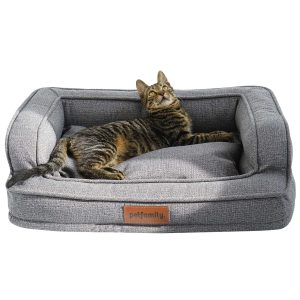
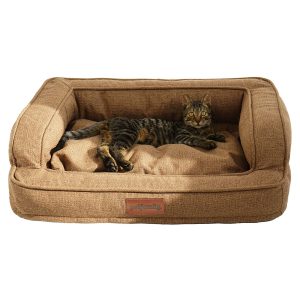


The Tailrific Orthopedic Bolster Luxury Pet Bed Series is engineered to eliminate bottoming out and provide clinical-grade joint relief:
- Solid Orthopedic Memory Foam Core: High-density, medical-grade memory foam adapts to your dog’s unique contours, distributing gravitational mass evenly across the entire surface and alleviating pressure off inflamed elbows, shoulders, and hips.
- Cushioned Structural Bolster Rim: Firm yet cloud-soft side bolsters encircle three edges of the bed, acting as an integrated orthopedic pillow for dogs that love to elevate their snouts and neck while watching the room.
- Plush Micro-Fleece Sleep Surface: Ultrasoft textured fleece locks in gentle warmth during cool nights, while the rugged, machine-washable outer shell with hidden heavy-duty zippers stands up to nesting and paw-circling routines.
- Calibrated Sizing for Every Breed: Available in Small (26 × 20 in), Medium (30 × 22 in), and Large (34 × 24 in) across tasteful modern grey, warm brown, and navy tones that elevate living room decor.
How to pick the perfect bed size for your dog
Do not rely on weight estimates alone. Measure your dog while they are comfortably sleeping in their favorite natural position:
- For Curlers: Measure from the tip of the nose to the base of the tail and add 6 to 8 inches. The inner sleep area inside the bolster rim should easily accommodate their curled diameter.
- For Stretchers and Sprawlers: Measure from the outstretched front paws to the tip of the hind toes. Sprawlers require a larger mattress surface so their paws do not dangle uncomfortably onto cold floorboards.
Rest is recovery
Sleep is when your dog’s immune system repairs tissue, neural pathways process daily training memories, and joints lubricate for tomorrow’s adventures. Upgrading from a bare floor or crushed polyester pillow to a dedicated orthopedic bolster bed is one of the most impactful, loving investments you can make in your dog’s lifelong mobility and comfort.