
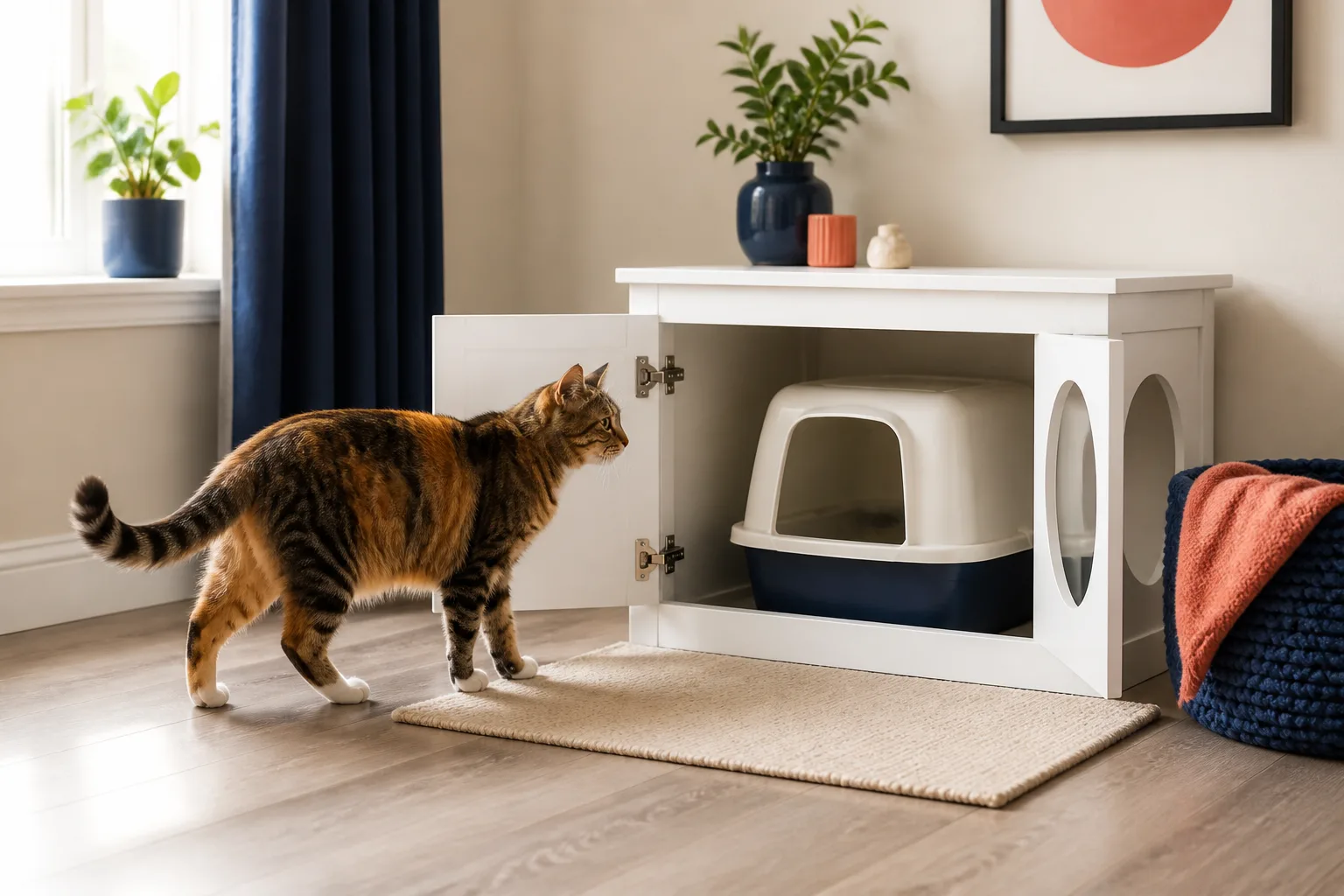
The litter box is the least glamorous piece of furniture in the house and the one your cat reviews most aggressively. Humans want odor control and a tidy room. Cats want space, quiet, clean litter, and an exit that does not feel like a hallway ambush. A furniture-style enclosure can work—but only after the cat’s requirements win the design meeting.
The cabinet is not the litter box. It is the structure around it. The inside tray still needs to be large enough, cleaned often, placed thoughtfully, and accepted by the actual stakeholder with whiskers.
Measure the cat, the tray, and then the cabinet
The litter tray should allow the cat to enter, turn around, scratch, and eliminate without feeling cramped. Measure the outside of the tray and compare it with the enclosure’s usable interior dimensions—not the cabinet’s overall footprint. Older cats, kittens, and cats with mobility concerns may need a lower entrance and easier access.
One box beside another is not a real estate portfolio
For multi-cat homes, the usual starting point is one litter box per cat plus one additional box, distributed in different locations. Cats can treat side-by-side boxes as one resource. Choose quiet, accessible areas where another pet cannot block the entrance or trap a cat inside. Keep litter boxes away from food, water, noisy appliances, and household traffic jams.
Covered, uncovered, or “I reject your proposal”
Many cats prefer uncovered boxes, while some appreciate more privacy. An enclosure adds another layer around a covered or uncovered tray and may concentrate odor if airflow and cleaning are poor. Introduce it gradually and keep an accepted alternative available. If your cat stops using the box, do not punish the cat; reassess the box, location, litter, access, cleanliness, and health.
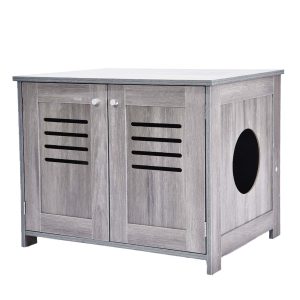

The Tailrific Double-Door Cat Litter Box Enclosure measures 27.5 × 20.27 × 20.25 inches overall, with an 18.8 × 25.5 × 18.8-inch interior and a reversible side opening. Compare those interior dimensions with the outside dimensions of your litter tray before purchase. An enclosure can make the litter area look tidier, but it still needs daily scooping, routine washing, and enough airflow to prevent odors from building up.
Odor control begins with the scoop, not a gadget
- Scoop waste at least once daily and add litter as needed.
- Wash the tray regularly with mild soap and hot water; avoid strong ammonia-based cleaners.
- Use litter your cat accepts. Many cats prefer soft, unscented clumping litter.
- Keep airflow paths clear and ventilate the room without placing the box in a cold or noisy draft.
Accidents are a message, not revenge
Eliminating outside the box can be associated with medical problems, pain, stress, access, conflict, an unsuitable box, or litter preferences. A sudden change, straining, frequent trips, crying, blood, or inability to urinate requires prompt veterinary attention; inability to pass urine can be an emergency. Do not assume your cat is making a decorative statement about the rug.
Let the cat approve the renovation
A good setup gives the cat enough space, an easy route, clean litter, and a real choice. The enclosure can make the room look calmer, but the cat decides whether the bathroom works. Measure carefully, clean consistently, watch behavior, and be willing to change the plan. That is how a litter area becomes less stressful—even if nobody ever features it in a home tour.