
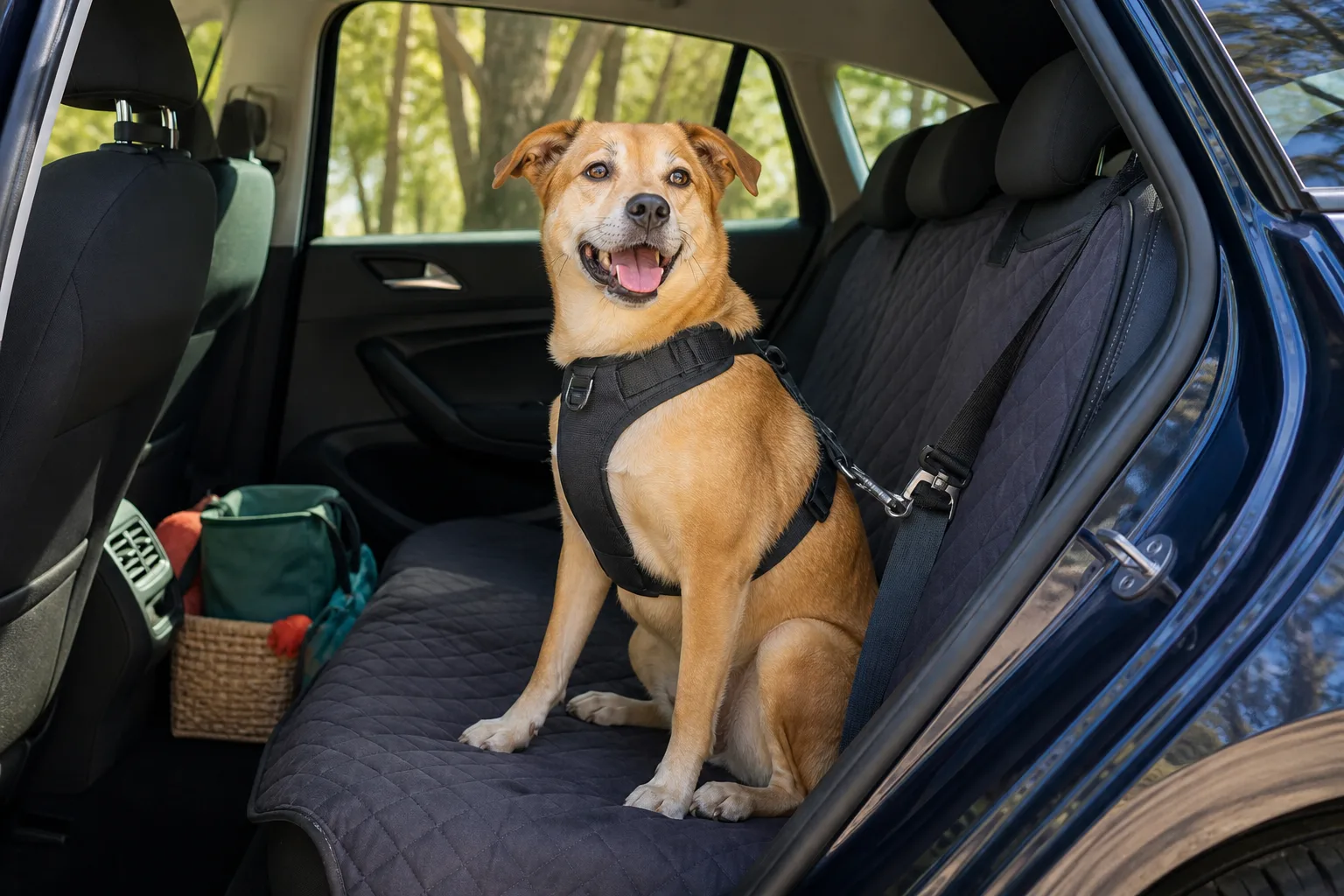
Your dog believes the back seat is a mobile observation deck, snack lounge, and full-contact greeting zone. Your upholstery remembers the mud. Your shoulder remembers the surprise nose that appeared beside it at a red light. A safer car ride starts by separating three jobs that are often confused: restraining the dog, protecting the seat, and keeping everyone comfortable.
A seat cover can protect fabric. A tether can help limit movement. Neither should be credited with crash protection unless the manufacturer specifically supports that claim. Good travel planning is less glamorous than a dog wearing sunglasses in the passenger seat—but considerably more useful.
The driver is not a climbing structure
A loose pet can distract the driver, move into the footwell, or be injured during sudden braking. Keep pets away from the driver’s lap and front-seat airbags. Choose a restraint or carrier appropriate for the pet, vehicle, and trip, then follow its instructions exactly. If independent crash testing matters to you, verify that specific certification before purchase rather than assuming every product called a “safety belt” has the same performance.
The harness rule that is not negotiable
A vehicle tether should connect only to an appropriate pet harness—not a neck collar. Sudden force on a collar can injure the neck and airway. Adjust the tether so your dog can sit or lie comfortably without roaming across the seat, reaching the driver, or becoming tangled. Check the connection before every trip, because buckles have no respect for your departure schedule.
Build confidence before the highway provides feedback
- Start parked. Let your dog explore the setup with the engine off and reward calm behavior.
- Add tiny trips. Drive around the block, return home, and end before stress escalates.
- Watch for distress. Excessive panting, drooling, whining, vomiting, restlessness, or lethargy deserve attention.
- Ask the veterinarian. Repeated motion sickness, severe fear, or health concerns need professional guidance—not a random human medication.
Protect the seat, but do not confuse upholstery with anatomy
A back-seat protector can create a cleaner, more defined travel area and reduce the emotional impact of wet paws. It does not restrain the dog or provide crash protection. Secure it according to its instructions, keep restraint access points usable, and check that no loose straps or folds create a snagging hazard.
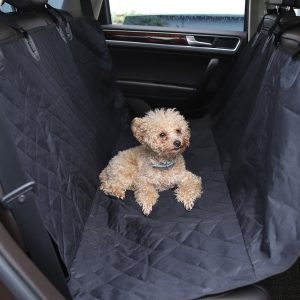
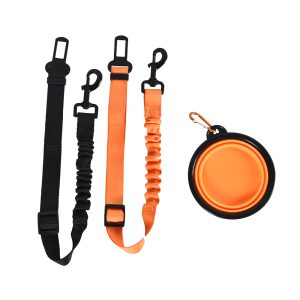


The Tailrific Adjustable Dog Car Safety Belt adjusts from 21.7 to 33.9 inches and includes a foldable pet bowl. It is intended to help limit movement and must be attached to an appropriate harness; it is not represented as independently crash-tested protection. The Tailrific Car Seat Protector provides 57.8 × 53.9 inches of back-seat coverage with layered Oxford fabric and a non-slip backing. It protects upholstery—it is not a restraint.
Road-trip packing: because gas stations do not stock your dog’s prescription
- Current identification and a secure leash or harness.
- Fresh water, a clean bowl, food if needed, and regular medications.
- Waste bags, towels, cleaning supplies, and a familiar blanket or toy.
- Planned breaks in safe locations away from traffic.
- Veterinary records or travel documents when the destination requires them.
Heat has no sense of humor
Never leave a pet alone in a parked vehicle. Cabin temperatures can become dangerous quickly, even when the day does not feel extreme. Keep air moving, offer appropriate breaks and water, and watch your pet. If your pet appears overheated, weak, confused, uncoordinated, or collapses, move to a cooler area and contact an emergency veterinarian immediately.
A successful arrival has fewer plot twists
Restrain the dog, protect the seat, practice the routine, and pack the essentials. Those four steps cannot guarantee traffic will behave, but they can make the passenger with the tail far easier to manage. Less roaming. Less upholstery archaeology. More Tailrific arrivals.