
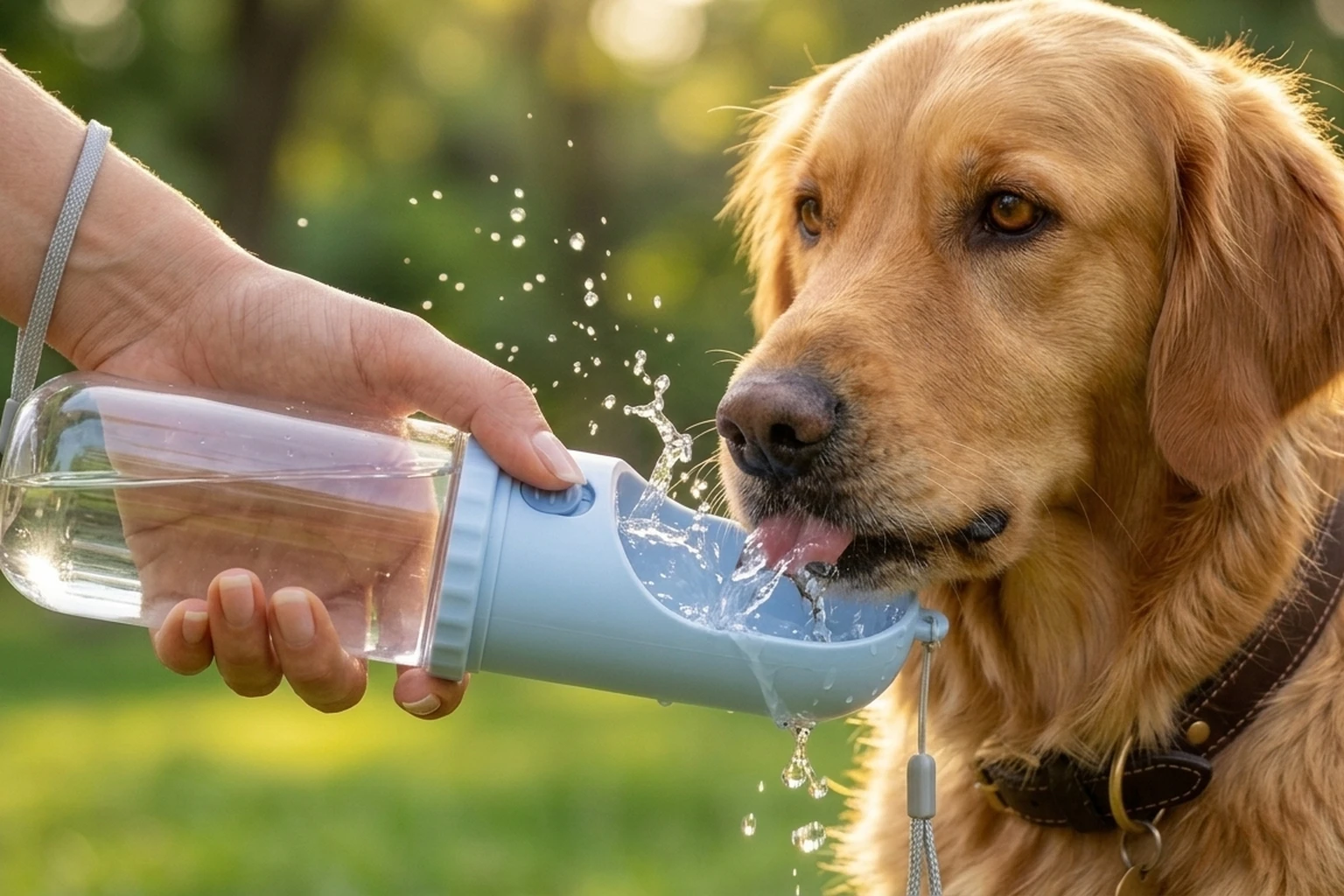
Your dog has packed exactly three things for the walk: enthusiasm, opinions, and absolutely no water. Meanwhile, you are holding the leash, keys, phone, poop bags, and the fragile hope that nobody rolls in anything mysterious. Hydration is easy to forget—right up until your dog is panting like a tiny leaf blower.
Here is the useful plot twist: keeping a dog comfortable on a walk is less about memorizing a magic number and more about planning the route, offering clean water before your dog looks desperate, and paying attention to the individual animal at the other end of the leash.
Panting is a cooling system, not a beverage
Dogs rely heavily on panting to release heat. Warm weather, direct sun, humidity, hard exercise, body size, age, flat-faced anatomy, and medical conditions can all change how quickly a dog becomes uncomfortable. The neighborhood athlete who sprints after every squirrel may need a very different plan from the senior who prefers a slow mailbox inspection tour.
Offer small chances to drink during longer walks, active play, travel, or warm conditions. If your dog treats a travel bottle like suspicious new technology, practice at home first. A calm introduction is easier than negotiating with a thirsty dog in a parking lot.
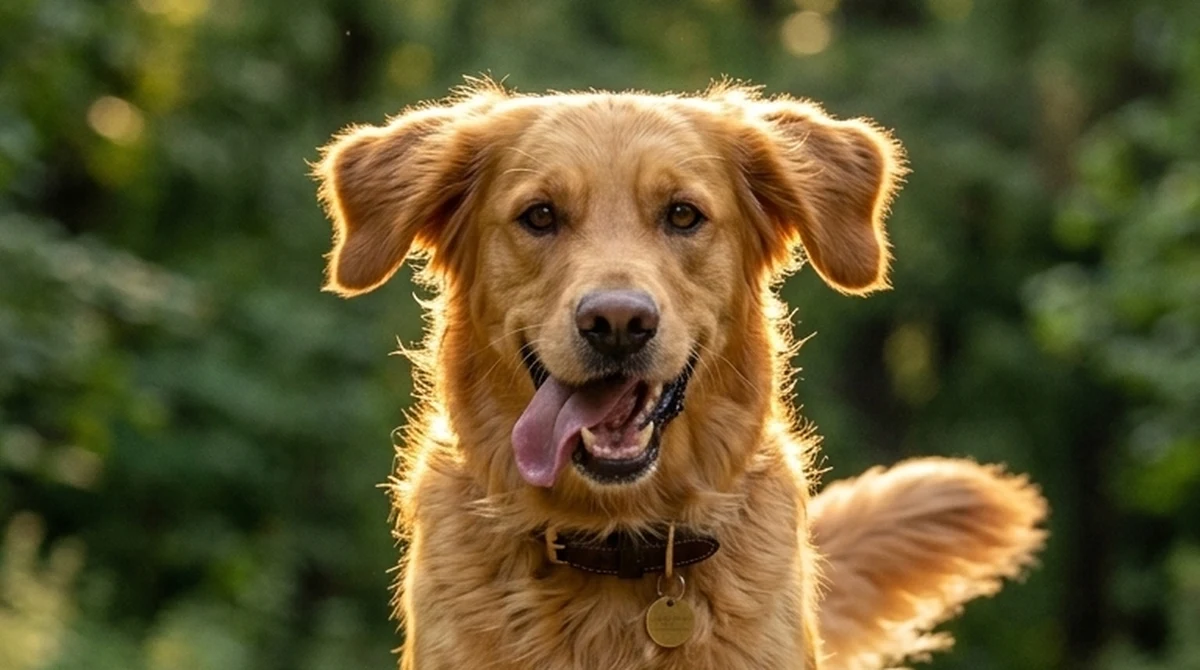
Pack like your dog has never respected an itinerary
- Check the conditions. Choose cooler hours and shaded routes when possible. Water helps, but it does not make dangerous heat safe.
- Plan for the detour. A “quick walk” can become a squirrel summit, neighbor meeting, or twenty-minute investigation of one shrub.
- Protect the return supply. Do not use every drop halfway through the outing.
- Use a clean drinking surface. Mystery puddle is a flavor, not a hydration strategy.
Watch the Guide: Dog Hydration & Heat Safety on Walks
The one-hand test: can you use it while holding a leash?
A useful travel bottle should match the outing, provide a drinking surface your dog can reach, close securely, and work without requiring the hand-eye coordination of a circus performer. A return-water feature can also reduce waste when your dog takes two elegant laps and immediately remembers a leaf that needs supervision.
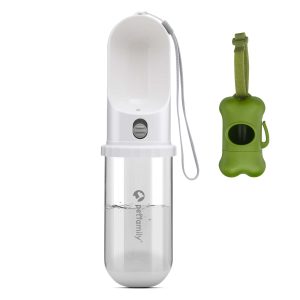
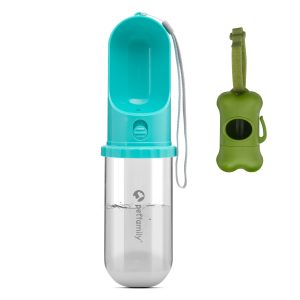
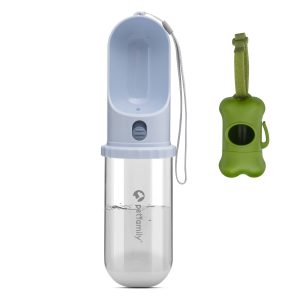


Tailrific Leakproof Portable Dog Water Bottle (450 mL)
Wide contoured drinking trough, one-touch button release with tilt-back water save, and mechanical slide lock to prevent leaks in bags. Designed so you can hydrate your dog comfortably with one hand while holding a leash.
The Tailrific Portable Pet Water Bottle holds 450 mL and features a wide contoured drinking trough with one-touch button release and tilt return, secured by a mechanical slide lock to prevent leaks. Available in Sky Blue, Warm Cream, and Vibrant Teal, it is engineered for quick, one-handed operation while holding a leash, ensuring your dog drinks comfortably without wasting fresh water on trails. For longer hikes or hot weather, pair it with extra water rather than asking one bottle to perform miracles.
Red flags: this is where the jokes stop
Excessive panting, thick or ropey saliva, weakness, confusion, vomiting, poor coordination, collapse, or difficulty recovering after rest can signal a serious heat-related problem. Move your dog to a cooler place and contact a veterinarian or emergency clinic immediately. Suspected heatstroke is an emergency; a blog post and a water bottle are not substitutes for veterinary care.
Please retire the swamp-water aesthetic
After the walk, discard leftover water and wash the tray, seams, valve, and every damp corner. Let all parts dry completely before storage. Replace a bottle with damage, a failing seal, or an odor that has achieved permanent residency. Tomorrow’s water should taste like water—not like last Tuesday.
The habit that makes walks more Tailrific
Check the weather. Pick a reasonable route. Fill the bottle. Offer breaks. Watch your dog. That is the whole glamorous system. Once it becomes automatic, you can spend less time wondering what you forgot and more time enjoying the walk your dog began requesting approximately four seconds after the previous one ended.
Frequently Asked Questions
How much water does a dog need per day?
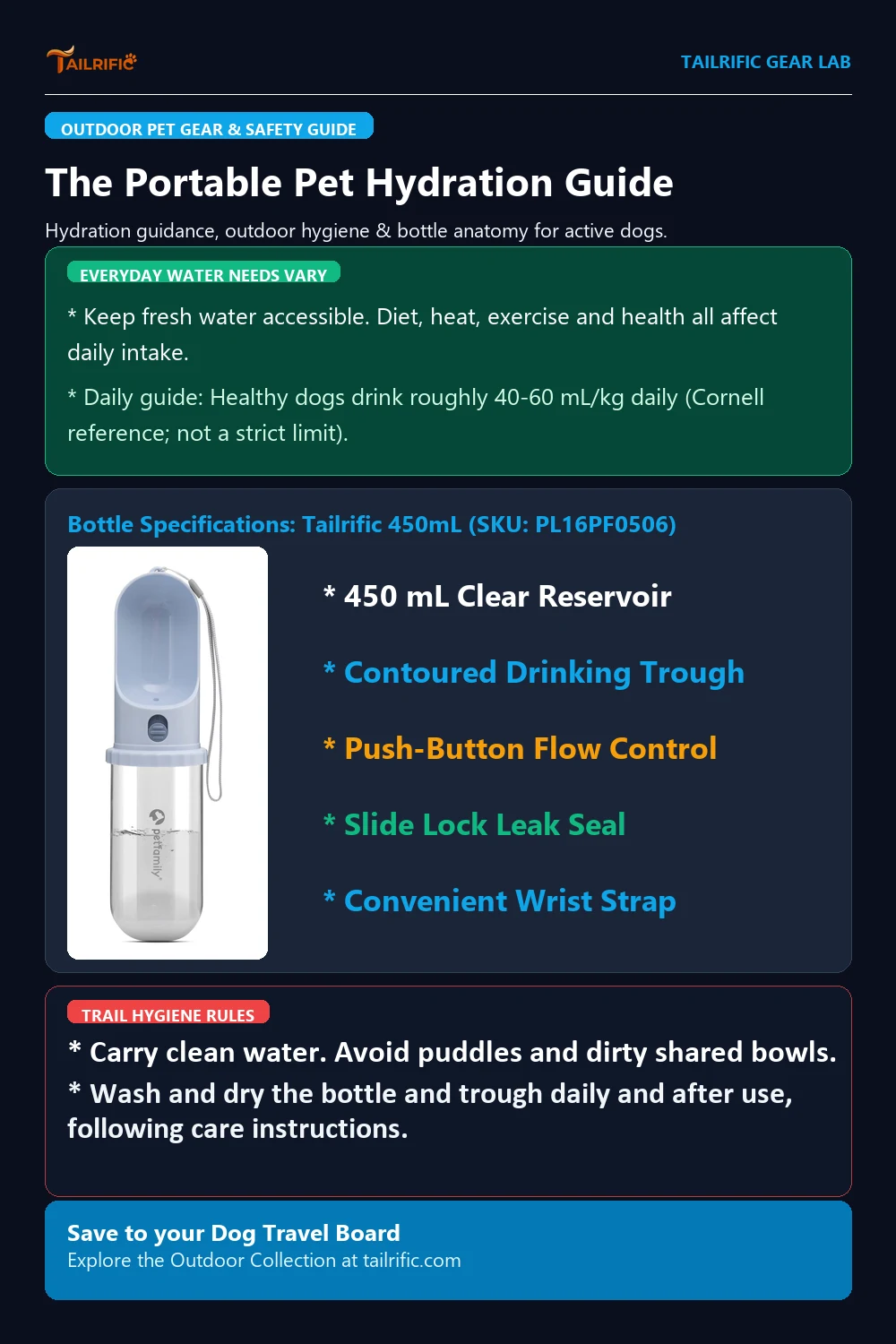
A general healthy guideline from Cornell University is approximately 50 mL of water per kilogram of body weight daily (roughly 0.75 to 1 ounce per pound). However, active walks, warm weather, and heavy panting significantly increase this baseline requirement.
Why shouldn’t dogs drink from puddles?
Outdoor puddles and stagnant water frequently carry hazardous bacteria like Leptospira (which attacks the liver and kidneys) as well as protozoan parasites like Giardia. Offering clean water from a portable bottle eliminates this risk completely.
What is the first thing to do if a dog shows heat exhaustion signs?
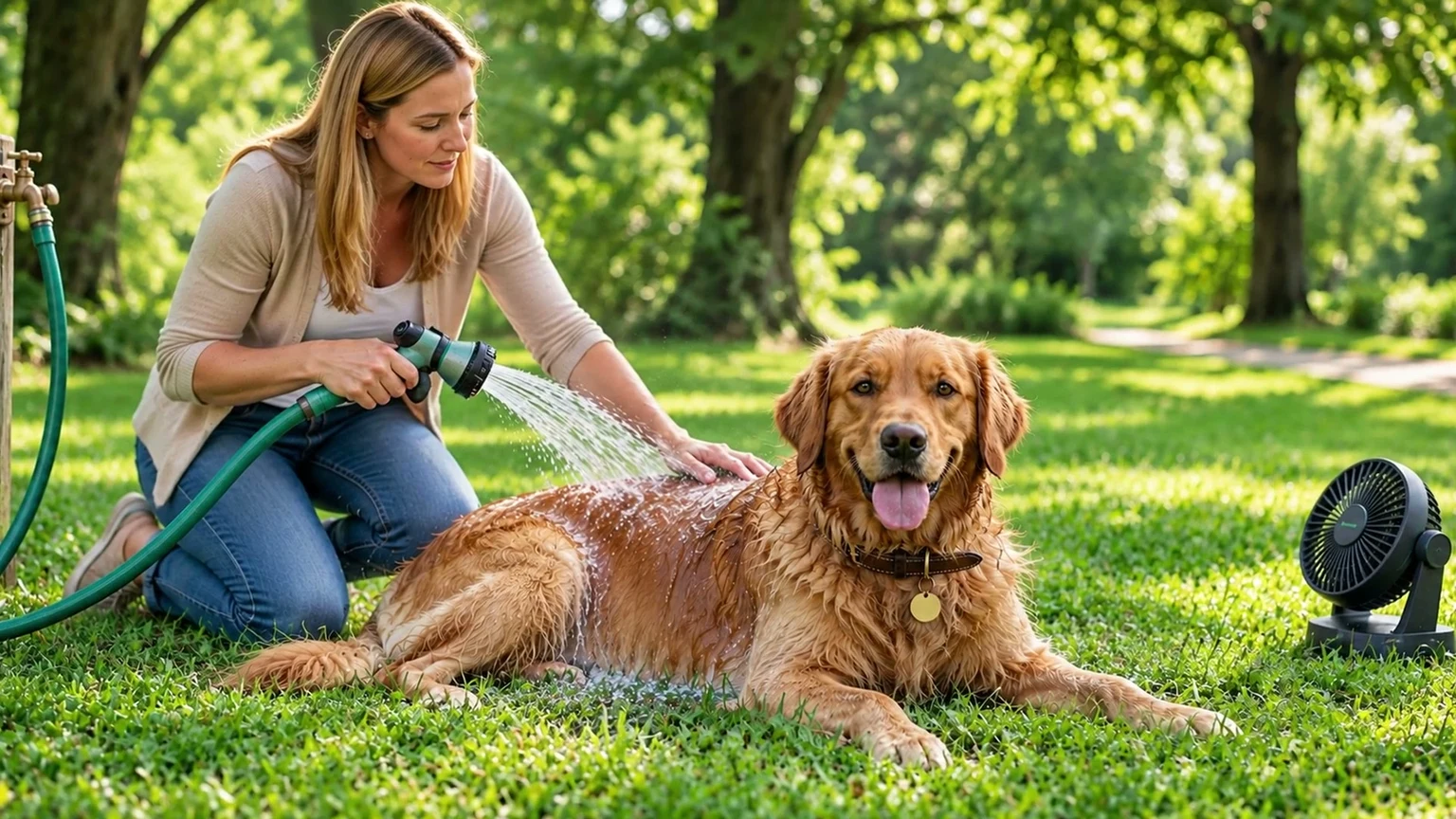
Follow the RSPCA golden rule: Cool First, Transport Second. Immediately stop exercise, move into shade, pour continuous room-temperature water across their body and paw pads (avoid ice water to prevent vascular shock), promote airflow, and contact an emergency vet without delay.
How does the one-handed bottle work while holding a leash?
The Tailrific 450 mL bottle features a contoured drinking trough that fits your dog’s muzzle naturally. Pressing the central button releases water with your thumb; tilting the bottle back and holding the button draws unused water back into the reservoir, preventing waste.