
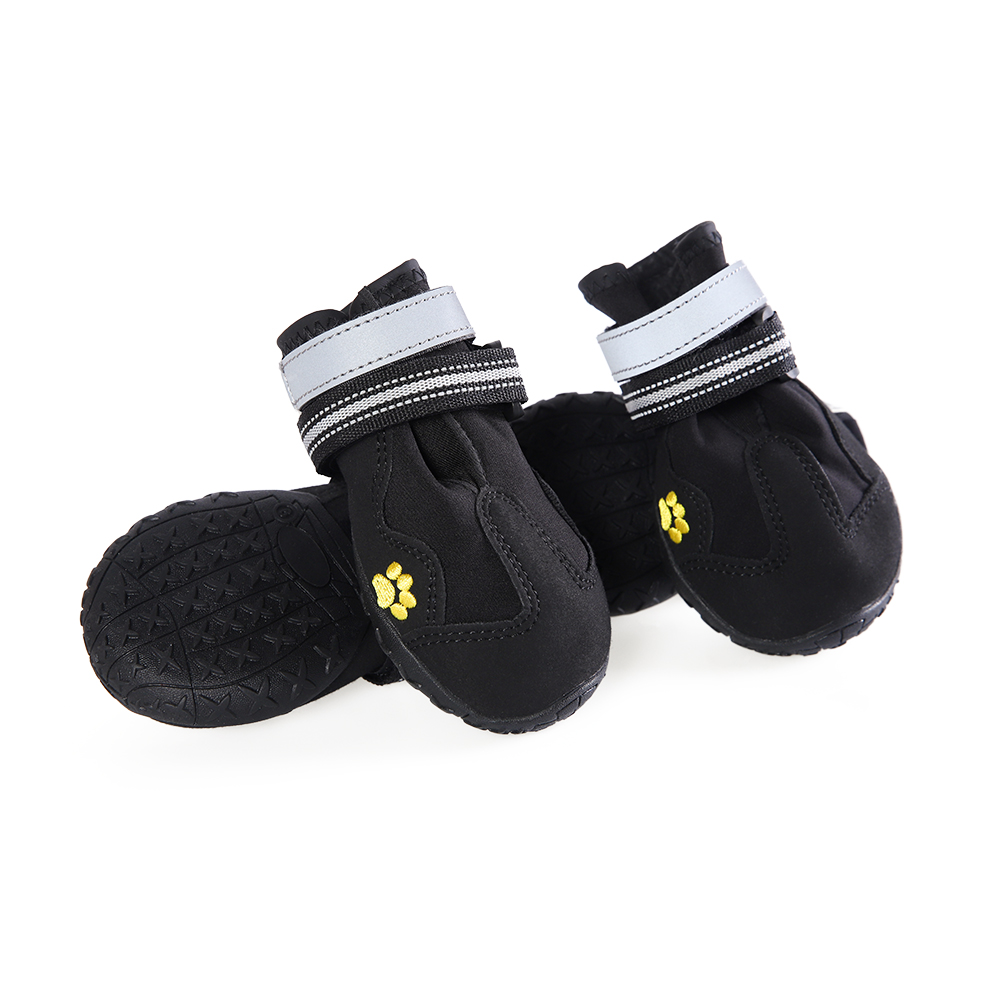
A dog can be ready for a walk before you finish saying the word, while you are still checking the weather, the route, and whether your keys have once again vanished into another dimension. That excitement does not mean every surface is comfortable or safe. Hot pavement, rough trails, road salt, ice, thorns, and sharp debris can irritate or injure paws, so a quick paw-protection plan is worth making before the leash comes out.
The sidewalk is not lava—but sometimes it is close
Protective shoes can be helpful, but the first choice is always whether the route and conditions are appropriate. In hot weather, walk during cooler hours, look for shade, and avoid surfaces that feel painfully hot to the back of your hand. On trails, watch for broken rock, burrs, thorns, and debris. During winter, be mindful of ice, deicing products, and packed snow between the toes. No shoe turns an unsafe route into a safe one.
Check your dog’s paws before leaving. Look at the pads, nails, and spaces between the toes for cuts, swelling, tenderness, or trapped material. If your dog is already limping, licking a paw repeatedly, or resisting normal handling, pause the walk and contact your veterinarian when appropriate. Covering an existing problem without understanding it may increase friction or delay needed care.
When tiny dog sneakers make actual sense
- Short exposure to rough or debris-covered terrain where extra pad protection is appropriate.
- Cold conditions involving ice, packed snow, or treated sidewalks.
- Warm surfaces after you have already adjusted the route, timing, and duration.
- Veterinary-directed protection during recovery, using the type and schedule your veterinarian recommends.
Shoes should support sensible decisions, not replace them. Your dog still needs breaks, surface checks, and regular paw inspections. Some dogs also need time to learn that shoes are not four tiny personal betrayals. Introduce them gradually, reward calm behavior, and keep the first sessions brief.
Fit matters more than the fashion show
Measure the paw according to the product’s sizing directions, ideally while the dog is standing so the paw bears weight naturally. Front and rear paws may differ, so measure both. A shoe should feel secure without restricting circulation, pinching toes, or rubbing the dewclaw. It should not twist easily or slide off during ordinary movement. If your dog’s measurement falls between sizes, follow the specific product guidance rather than guessing from breed or body weight.
-
 Dog Shoes, Set of 4, Size 3$35.97
The Tailrific Dog Shoes shown here are a set of four in Size 3, with a wide split-seam opening, two adjustable reflective straps, and a rugged anti-slip sole. Size 3 is only appropriate when your dog’s paw measurements match the product specifications. Confirm the size before ordering and inspect the fit indoors before using the shoes outside. Reflective details may improve visibility in low light, but they do not replace a leash, lighting, or safe route choices.
Welcome to the high-step comedy phase
Begin in a quiet room. Let your dog sniff the shoes, then touch one shoe gently to a paw and reward relaxed behavior. Put on one shoe for a few seconds, remove it, and repeat later. Progress to all four shoes only when your dog is comfortable. The first high-stepping walk is common because the sensation is unfamiliar. Stay calm, keep the surface nonslip, and reward a few natural steps instead of turning the session into a marathon.
- Keep early sessions short and positive.
- Check that fur, skin, and dewclaws are not caught under a strap.
- Recheck the fit after several minutes of movement.
- Stop if you see rubbing, persistent distress, limping, or a change in gait that does not quickly improve.
The post-walk paw audit: glamorous and necessary
Remove the shoes during breaks and check for redness, moisture, debris, and pressure marks. Wet paws and damp shoes can increase friction, so dry both thoroughly. After the walk, wash the shoes according to their care instructions and let them dry completely. Examine the soles and straps for damage before the next use. A worn sole or unreliable closure cannot provide the same protection as equipment in good condition.
Continue caring for the paws themselves. Wipe away dirt or deicing residue, dry between the toes, and keep nails maintained at an appropriate length. Contact your veterinarian for cuts, burns, swelling, bleeding, embedded objects, persistent licking, or ongoing limping. Do not apply human creams or pain medication unless your veterinarian specifically instructs you to do so.
Comfort beats an ambitious step count
Paw protection is a combination of judgment, preparation, fit, training, and observation. Check the route first, use shoes when they are appropriate, and keep watching your dog instead of assuming the gear has handled everything. With a measured introduction and regular fit checks, protective shoes can become one useful tool in a broader routine built around comfortable, confident walks.